Insecurity in the State of Mexico maintains constant pressure on the trucking industry , in one of the states with the highest crime rates in the country and a key hub for the distribution of goods. Faced with this situation, coordination between authorities and the private sector has become the cornerstone of efforts to contain the problem.
From the state delegation of the National Chamber of Freight Transportation (Canacar) , the work is coordinated through monthly inter-institutional meetings where the National Guard , state authorities, C-5 centers, as well as representatives of the transportation sector participate.
The timely monitoring of incidents and the exchange of operational information are part of these meetings, which also seek to resolve one of the main obstacles: the fragmentation between federal and local levels, which often dilutes responsibilities in addressing crimes.
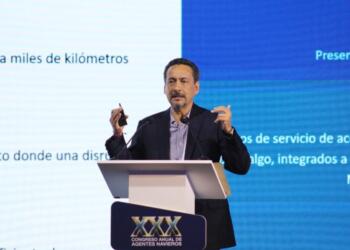
“We often find that if it’s a federal section, or if it’s a local section, then we seek that cooperation,” explained Paulina Montserrat Muñoz, delegate of Canacar in the State of Mexico.
In this context, strengthening institutional communication and ensuring the continuity of these spaces are emerging as key elements for advancing the security strategy. The close relationship with the authorities, he affirmed, is the result of sustained work over the years, not isolated actions.
At the same time, the organization is working on developing a more precise diagnosis of crime hotspots in the state. To this end, it is preparing a data collection effort that will be presented to the authorities , based on records from Canacar’s national call center .
“We are preparing the information through the call center and once we have it, the authorities told us: ‘present what you have and we will work with that’,” Muñoz explained.
This approach becomes more relevant when considering the geographical concentration of crime.
According to information from Overhaul , 68% of the incidence of cargo theft of food and beverages is concentrated in the central (37%) and Bajío (31%) regions, while 65% of these events are registered in six entities, including the State of Mexico, which concentrates the largest number of cases with 18 percent .
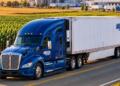
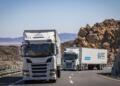
At the highway level, incidents are concentrated on strategic corridors such as the Mexico City–Saltillo highway (MEX-57D) with 14% of the events, followed by the Mexico City–Veracruz highway (MEX-150D) and the Guadalajara–San Luis Potosí highway (MEX-80D), both with 5%. Furthermore, the main target of criminals is heavy vehicles, particularly tractor-trailers (58%), box trucks (18%), and cargo vans (16%).
Thus, in an environment where crime rates remain high in key areas , the sector’s strategy involves not only reinforcing operational presence, but also consolidating effective coordination that allows information to be translated into concrete actions in the field.
Comment and follow us on LinkedIn: @Karina Quintero / @GrupoT21