Five months after the reform to the Customs Law came into effect , foreign trade in Mexico is undergoing a profound adjustment process. The operation has become slower, more expensive, and above all, stricter, but also more precise, experts agree.
For Magaly Cavazos, customs agent and vice president of the Association of Metropolitan Customs Agents (AAADAM) , the change has been structural: “you can no longer operate as in 2025; it is a new way of understanding customs . ”
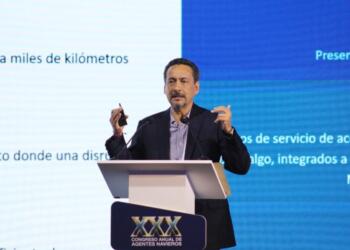
Beyond operational adjustments, the reform implies a fundamental change in the foreign trade model. According to what was stated at a conference of the Mexican Institute of Foreign Trade Executives (IMECE) , the new regulatory framework has shifted a significant burden onto the customs broker , who, without being an authority or owner of the merchandise, has become the central figure in verifying compliance.
This shift has been supported by industry stakeholders. Felipe Miguel González Jaimes, former president of the Latin American Confederation of Customs Agents (CLAA) , noted that the role of the customs agent has expanded beyond simply clearing goods to encompass a comprehensive audit of the taxpayer . “Today it’s: customs agent, know your importer,” he summarized.
THE TRUE IMPACT
One of the main effects has been the tightening of processes. The elimination of room for interpretation and the expansion of responsibilities have forced the entire chain to raise its standards.
Today, no transaction can proceed without a complete file. “It’s become a very clear line: there’s no green light if the entire file isn’t ready,” Cavazos explains. This includes everything from technical documentation to physical evidence of the transactions , which has required conducting client visits and strengthening compliance areas.
In this respect, the General Rules for Foreign Trade have formalized this requirement by mandating the validation of everything from the client’s operational capacity to their tax status. In practice, risk assessment has shifted to the beginning of the supply chain.
Comment and follow us on LinkedIn: @Jennifer Galindo / @GrupoT21