Mexico has ceased to be just a transit market and has become a point of articulation within global logistics chains, and in this reconfiguration, operators like SUARDIAZ Group are adjusting their strategy to capitalize on an environment where industry , foreign trade and productive relocation are increasing the complexity —and the value— of logistics services.
For the group, the country has gained importance not only due to the size of its economy, but also because of its role as a connecting hub between Europe, North America, and Latin America . This position, supported by its access to two oceans and its network of logistics corridors, allows it to integrate into multimodal systems that combine maritime, rail, and road transport with greater operational efficiency. Added to this is a robust manufacturing base, particularly in sectors such as automotive, aerospace, and electronics, which maintain a strong export focus and demand increasingly specialized logistics solutions.
In this context, Mexico’s repositioning within transatlantic supply chains is also linked to the evolution of trade agreements, particularly with the European Union , which expands market access and simplifies customs processes. The result is a more favorable environment for agile logistics flows, where the country serves not only as a destination but also as a regional redistribution platform.
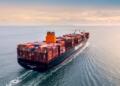
Within this dynamic, roll-on/roll-off (Ro-Ro) cargo is emerging as one of the segments with the greatest potential. SUARDIAZ’s operations in Mexico focus on flexible and specialized solutions , with an emphasis on industrial projects requiring a high degree of technical adaptation. These operations are characterized by the movement of heavy machinery, specialized equipment, self-propelled units, and, to a lesser extent, finished vehicles, reflecting a demand aligned with industrial expansion and the arrival of new investments.
In this scenario, the Ro-Ro model offers clear operational advantages over container transport. By allowing cargo to roll in and out, it eliminates complex handling processes, reduces port times, and minimizes the risk of damage—factors that are crucial for industries that move high-value or non-standard-sized assets. This operational efficiency positions it as a competitive alternative for industrial and automotive projects, particularly in environments where time and cargo integrity are critical variables.
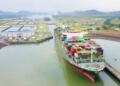
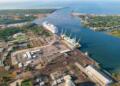
Mexican port infrastructure also plays a central role in this equation. Ports such as Veracruz, Altamira, Lázaro Cárdenas, and Manzanillo are consolidating their position as strategic platforms for these types of operations, supported by expansion and modernization processes that have increased their competitiveness compared to other international hubs .
The rise of nearshoring is reinforcing this trend. The establishment of new plants and the expansion of industrial capacity are generating a greater need to relocate large-scale production equipment, machinery, and components, increasing the importance of logistics schemes such as Ro-Ro . This phenomenon is also modifying flow patterns, with growth in both imports and exports of industrial cargo under this model
Beyond maritime transport, SUARDIAZ’s strategy in Mexico relies on a comprehensive offering that includes FCL and LCL services , air freight, regional ground transportation solutions, and domestic logistics. This integration enables the development of door-to-door solutions that reduce touchpoints, optimize costs, and improve supply chain visibility—a factor increasingly valued by industries operating under just-in-time systems .
In this sense, the commitment to multimodal solutions becomes a structural component. The ability to integrate different modes of transport not only allows for greater operational flexibility but also helps mitigate risks and respond more quickly to supply chain disruptions. This logic extends to sectors such as energy and infrastructure , where project cargo management requires detailed planning and coordinated execution—areas where the group identifies opportunities given its expanding investments in Mexico.
In parallel, digitalization is beginning to redefine the sector’s competitiveness . The use of artificial intelligence, predictive models, automation, and the Internet of Things is geared towards improving planning, anticipating risks, and ensuring real-time traceability. This technological layer not only optimizes operations but also strengthens integration among the various actors in the logistics chain.
With an established presence in the country, the company aims to consolidate its position by strengthening its sales network in key industrial hubs and adding specialized talent. The strategy is clear: to support the growth of sectors such as energy, automotive, and manufacturing , which are poised to be the main drivers of demand for specialized logistics services in the coming years.
Looking ahead, the outlook is consistent: Mexico will continue to consolidate its position as a continental logistics hub , driven by its industrial base, its network of trade agreements, and its strategic location. In this scenario, competition among operators will not be defined solely by capacity, but by the ability to integrate solutions, anticipate needs, and execute with precision in increasingly demanding environments. SUARDIAZ seeks to position itself in this space, with Ro-Ro and integrated logistics as the cornerstones of a strategy focused on capturing value in a rapidly transforming supply chain.
Comment and follow us on LinkedIn: @GrupoT21