The Eternity Group Mexico EAX Index , a benchmark indicator for maritime rates on the Asia-Mexico and West Coast of South America (WCSA) route, triggered signals that the maritime market had been anticipating , but not with the intensity observed in February 2026.
With an average value of $1,384 per 40-foot container (FEU) during the second month of this year, the indicator not only broke the inertia of stability that had characterized recent months, but also revealed a turning point in the dynamics of chartering costs globally.

The month’s performance is not linear. February was divided into two clearly distinct halves: a first half with contained rates, anchored around $880, followed by an abrupt break starting on February 13th that led the index to climb to $1,785 in the last week. This behavior not only reflects volatility, but also an accelerated market reaction to factors that ceased to be latent and became active triggers.
From a monthly perspective, the adjustment is significant. The EAX registered a 34.76% increase compared to January, confirming “a decisive upward trend change in chartering costs,” according to the Eternity Group Mexico report. This is not a technical rebound, but rather a structural restructuring driven by simultaneous shocks in supply, demand, and the geopolitical environment.
Looking ahead, the outlook offers no respite. The index itself warns that “the market faces an imminent upside risk in FAK (Freight All Kinds) rates,” pressured by two converging forces: the drag on volume following the Chinese New Year (CNY) and a geopolitical escalation that is no longer peripheral . Tensions between the United States, Israel, and Iran, coupled with attacks on key infrastructure in Dubai, are already having tangible operational consequences.
The impact is significant. What was once a source of uncertainty is now translating into concrete decisions by shipping companies. The report indicates that they “have gone from being a mere security alert to a real factor of logistical disruption,” in a context where route diversions are extending transit times , while fuel futures are beginning to reflect double-digit increases. The immediate result is sustained pressure on rates and an effective reduction in available capacity on key routes, stemming from changes in rotations.
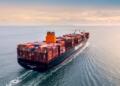
Paradoxically, this upward pressure coincides with a continued expansion of supply. According to Alphaliner, an additional 65,261 TEUs (twenty-foot equivalent units) were added to the global market in February, signaling that shipping lines are maintaining their commitment to capacity, even in an environment of increasing uncertainty. Maersk played a prominent role , adding approximately 14,931 TEUs through new vessels, although Yang Ming led the way individually with the arrival of the megaship YM Willpower, which alone added 15,600 TEUs.
This duality – more capacity in the system and, at the same time, operational restrictions – is beginning to redefine market balances, where the actual availability of space does not necessarily translate into greater logistical fluidity.
The effect is also replicated on specific routes. On the corridor to the east coast of South America (ECSA) , the EAX index showed a similarly pronounced upward correction. After reaching levels close to $1,494 at the end of January, the fare experienced a “vertical jump” that led it to stabilize above $1,992, closing February at $2,030 per FEU. This represents a monthly increase of 14.55%, confirming that the disruption is not isolated, but systemic.
Thus, the February EAX does not only measure rates: it maps a market entering a new phase , where volatility ceases to be the exception and becomes the norm, and where geopolitical, energy, and operational factors begin to intertwine with a force that the logistics sector cannot afford to underestimate.
Comment and follow us on LinkedIn: @GrupoT21