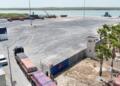
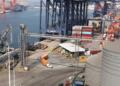
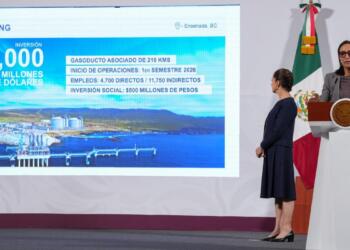
In Mexico, there persists a curious tendency to build state-owned ports that aspire to compete with established giants. It’s as if the mere construction of a pier could challenge decades of operation, connectivity, and institutional learning. Punta Colonet aims to rival Ensenada, while Matamoros presents itself as an alternative to Altamira . Both projects promise to reshape the logistics landscape, but they also highlight the gap between political ambition and the system’s actual capacity to sustain complex port models in underdeveloped regions.
In Baja California, José Saúl de los Santos, Director General of the Baja California Port Authority and Undersecretary of Economic Planning for the state , argued that port development cannot be understood without the state’s economic reconfiguration. Speaking at the 29th Annual Congress of Shipping Agents, organized by the Mexican Association of Shipping Agents (Amanac) , he noted that “more than 90% of Baja California’s economic activity is concentrated along the border,” and therefore the government seeks to decentralize economic activity and revitalize historically marginalized areas. From Ojos Negros to San Quintín, the goal is to establish a regional logistics system supported by underutilized airports, highways, a future railway, and production hubs that will pave the way for the revitalization of Punta Colonet.
The project, which has already seen decades of failed attempts, reached a turning point in September 2025 with the granting of the concession title by the Mexican Navy . De los Santos described it as “a very important milestone,” comparable to the approval of the Environmental Impact Statement a year earlier. The legal structure also changed: now APIBC—the majority state-owned company created to manage the project— is seeking partnerships with private companies to avoid indebting the government and to share the risk of a project planned in three phases that, according to the technical presentation, could handle up to 4.8 million twenty-foot equivalent units (TEUs) annually.
The plan’s figures are monumental: a 2,769-hectare site, 323 hectares of reclaimed land, 17.5-meter-wide access channels, 15 berths, and terminals for containers, liquids, mineral bulk, energy, and multipurpose cargo. Added to this is a 310-kilometer rail line that would cross into Arizona to connect with the Mexican and U.S. rail networks . “We’re talking about a decade to develop the port,” said De los Santos, although he projected starting operations in 2029, always subject to the Master Plan, which will be ready by the end of 2025.
The energy environment is key . Baja California, historically vulnerable, now boasts a surplus thanks to the Puerto Peñasco photovoltaic park and new gas pipelines that will allow the export of natural gas and hydrogen from Colonet. There are also water projects worth more than 24 billion pesos, reinforcing the narrative of an ecosystem capable of sustaining a mega industrial and port project without repeating past mistakes. The central message was clear: the state wants private investment that believes in a long-term vision, even if the results extend beyond the current administration.
But the inevitable question remains: can a port be successful from the start without a market demanding it from day one? Colonet aims to capture a share of the more than 30 million TEUs arriving from Asia to the northwestern United States. However, competing with the traffic anchored in Los Angeles, Long Beach, and Ensenada requires more than just good maps: it demands reliability, governance, and costs that only time will validate. The risk, as with any megaproject, is that the infrastructure will advance faster than the cargo volume .
Comment and follow us on X: @EnriqueDuRio / @GrupoT21