Due to increased investor caution regarding changes in U.S. tariff policy, Foreign Direct Investment (FDI) inflows to Mexico totaled $43.221 billion , the third highest value since 1990, although this figure represented a 5% decrease, according to the Economic Commission for Latin America and the Caribbean (ECLAC) .
Reinvestment of profits was the largest component (64% of the total), despite a slight year-on-year decrease of 3.7%, and capital contributions grew in relation to what was received in 2024 (78.1%), the organization explained in the report “Foreign Direct Investment in Latin America and the Caribbean 2026: navigating the new global context” .
According to the study, services and manufacturing accounted for almost all FDI, with 59% and 36%, respectively.
In that sense, the services sector registered a marked increase of 60% in foreign capital inflows compared to 2024, while in manufacturing they decreased by 25.5%, after the pronounced increase they had experienced in 2023 and 2024.
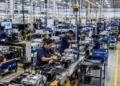
“Investment in Mexico’s manufacturing industry , and particularly the automotive industry, has shown an upward trend over the last 20 years. In 2023 and 2024, a marked increase in investment was recorded, which was not sustained in 2025, and investment in the manufacture of transportation equipment fell by 31.3 percent. Nevertheless, with 46% of total manufacturing investment, the automotive sector remains the industry with the highest investment in the country, and the amount of investment in 2025 exceeds the average received during the 2010s,” he noted.
Meanwhile, the value of announced projects in Mexico totaled $25,075 million , representing a 43% reduction compared to 2024, but was in line with the average values of the 2010s.
“The decrease was associated with less activity in sectors that have traditionally received large announcements, such as the automotive industry (-65%), communications (-76%) and the coal, oil and gas sector (-99.9%), which, after a record amount in 2024, had almost no announcements in 2025,” he stressed.
Despite the decline, some sectors saw an increase in announcements: in renewable energy, the US company Transition Industries announced a low-carbon methanol production project, while in the software and IT services sector, Tata Consultancy Services, an Indian firm, announced the opening of a new office that is estimated to employ five thousand people.
ECLAC stated that, to the extent that Mexico manages to scale up and improve its productive development policies, particularly through the efforts it has been making with the Mexico Plan , it will be able to take better advantage of opportunities to attract foreign capital.
FDI in Latin America and the Caribbean
As for Latin America and the Caribbean, the region attracted $194.233 billion, an increase of 1.7% year-on-year , although this increase occurred unevenly among countries and economic sectors.
“The structures and dynamics of FDI attraction within the region are very heterogeneous. Brazil and Mexico accounted for 62% of total inflows in 2025,” ECLAC noted.
According to the report, after Brazil and Mexico, the countries that received the most foreign capital were Chile, Peru, Colombia, Guyana, Costa Rica, and the Dominican Republic .
The agency indicated that reinvestment of profits represented 51% of FDI in the region; followed by capital contributions (34%) and intercompany loans (15%).
The analysis also highlighted that regional cross-border mergers and acquisitions saw a moderate uptick in 2025, centered on 351 deals, representing a year-on-year increase of 7.7 percent.
Meanwhile, 67% of the investment flow came from the United States and Europe, and he pointed out that last year 1,326 projects were announced for a total of $114.1 billion in the region.
“In the midst of a complex international scenario, characterized by the geopolitical context derived from the United States’ trade policy, investment announcements towards the region fell 34.3%,” he stated.
Given this scenario, ECLAC recommended diversifying export markets and investment origins , strengthening regional coordination spaces, and better preparing human capital to meet the economic challenges of the area.
Comment and follow us on LinkedIn: @GrupoT21