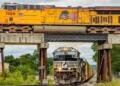
Union Pacific (UP) and Norfolk Southern (NS) filed a new merger application with the Surface Transportation Board (STB) on Thursday, with additional analysis reinforcing that the combination will boost growth, allow substantial savings for carriers, and strengthen the U.S. supply chain.
“After completing the additional work requested by the STB, the facts remain clear: This merger enhances competition and delivers real public benefits that strengthen America’s supply chain. Our analysis uses comprehensive, system-level traffic data provided by all Class I railroads to identify even more opportunities for our combined railroad to grow and compete,” said Jim Vena, CEO of Union Pacific.
He asserted that the analysis of the updated application is the first in the history of rail mergers to use 100% real traffic data provided by the six Class I railroads in North America, rather than the sample data available from the STB, making it the most comprehensive assessment of market and operational impacts to date.
Furthermore, he confirmed that the merger will make rail significantly more competitive with long-haul trucking , taking approximately 2.1 million trucks off the road. Shifting freight from trucks to rail will save nearly $3.5 billion annually, benefiting consumers and making American products more affordable. Carriers will also save on inventory and equipment costs through the faster and more reliable service of the combined rail system.
“This merger is fundamentally about growth. Shippers have been clear about what they value, and the data backs it up. When single-track rail service is available, they choose it. Our combined network will offer seamless freight transfers within and across Mississippi Basin markets, with a responsible Class I rail system from origin to destination,” said Mark George, president and CEO of Norfolk Southern.
It should be recalled that on January 16, the STB announced its rejection of the application and invited both companies to submit a revised application addressing the deficiencies identified in the decision. The STB specified that the railway companies must include a comprehensive system impact analysis, market share projections for the entity to be created through the transaction, and the complete merger agreement, including the submission of any contracts or other written instruments related to the transaction.
According to their current analysis, the UP-NS combination is an end-to-end merger that connects the eastern and western United States with the goal of achieving growth through new routes and improved service that eliminates interchange transfers that can add 24 to 48 hours and costs to the supply chain.
To address the additional growth opportunities identified with stronger Class I traffic data, the amended application increases the projected number of new premium intermodal lanes operating seven days a week from six to seven, with a new lane connecting Northern California and the Southeast. “The combined company will have sufficient equipment and infrastructure capacity to support projected growth.”
Furthermore, the document confirms that the merger will preserve customer access to competitive rail alternatives and will not have a significant impact on geographic competition or the availability of independent routes.
“Our projections show that the combined rail will travel roughly the same number of ton-miles as our western competitor today, underscoring how this merger will increase competition in the market. That competition will drive innovation and help reduce costs—benefits that American carriers and consumers will feel directly,” Vena said.
Additionally, it will also generate more well-paid union jobs , as the combined company is estimated to need 1,200 new union jobs by the third year of the merger to manage new business, up from 900 in the original request. “This growth adds to the unprecedented guarantee of lifetime jobs.”
“As requested by the STB, the amended application includes more detailed market share projections that account for the growth the combined railroad expects to achieve as carriers shift truck and other rail traffic to its faster, more reliable coast-to-coast service. The analysis confirms what we’ve been saying: our merger will generate strong growth by offering customers a superior service product, which in itself creates competition in the rail industry. The announcement of our merger alone has prompted other railroads to respond with new bids,” George commented.
Both parties asserted that the updated application complies with the guidelines and presents an even stronger argument for why the United States needs a seamless, coast-to-coast railroad to revitalize the rail industry. The transaction remains subject to review and approval by the State Transportation Board (STB) within its statutory timeframe.
Comment and follow us on LinkedIn: @GrupoT21