In an intermodal terminal, every movement has a consequence on the next. A misplaced container can lead to more maneuvers; a delayed decision can halt a train; and rail planning that doesn’t consider all constraints can extend a train’s stay. This is where Ferrovalle seeks to bring artificial intelligence (AI) to the physical operation of its rail yard .
The company is working with INFORM on a Smart Yard project that will incorporate the Syncrotess Optimization Plus platform into its Mexico City intermodal terminal. The aim is not to replace the existing technological infrastructure, but rather to use it as a source of information to build an additional optimization layer capable of coordinating containers, equipment, trucks, and trains.
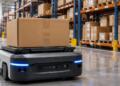
In an interview with T21, Rafael Velásquez, Director of Optimization and Integration at INFORM, explained that the objective begins with something concrete: increasing the performance of the equipment already in operation . The first stage includes eight RTG cranes, four reach stackers, and 14 terminal tractors, with the aim of increasing productivity before physically expanding capacity.
“A central objective of the optimizer is precisely to maximize the productivity and capacity of the existing equipment fleet and infrastructure before incorporating additional capacity. In other words, to achieve greater operational performance with current assets ,” he noted.
Logic is changing how we understand automation. It’s not just about moving a crane or tractor faster, but about reducing non-value-adding movements: repositioning, rehandling, and unnecessary travel. In this sense, Smart Yard will seek to measure productivity in maneuvers per hour and increase the proportion of productive movements relative to the total .
The challenge takes on greater significance in a railway system that maintains a close relationship with foreign trade. Data from the Statistical Yearbook of the Ministry of Infrastructure, Communications and Transportation (SICT) indicate that in 2025, freight transported by rail for foreign trade reached a total of 98.38 million tons , a 2.5% increase compared to the 96.02 million tons of 2024. This positions intermodal terminals as key components for connecting rail freight with other modes of transport.
At Ferrovalle, moreover, operations are not governed by a single set of conditions. Some yards are under customs control, while others have already been cleared, meaning that a seemingly simple decision—such as where to place a container or what movement to perform—also depends on its documentation status. The system must incorporate this condition to prevent operational optimization from running counter to customs requirements.
“Syncrotess Optimization Plus incorporates the documentary and customs status available in Ferrovalle’s systems as a condition for operational decision-making, ensuring that recommendations respect the restrictions applicable to each container,” Velásquez explained. This allows work orders to be anticipated and the movements that tractors and other equipment will need to make to be prepared before they are physically executed.

This highlights one of the fundamental changes: the dispatchers’ expertise doesn’t disappear. Technology takes over part of the information processing that until now required manually reviewing multiple variables, while staff retain oversight and the ability to intervene when operational conditions deviate from expected scenarios.
“Our approach is to combine the experience of operational staff with the ability of technology to process information and optimize decisions in real time,” the executive noted. The intention, he added, is for people to validate, adjust, and act on exceptions, while algorithms help reduce repetitive tasks and maintain more consistent decisions.
Train planning will be another area of major impact. With Train Load Optimizer , container allocation to platforms will simultaneously consider weight, center of gravity, destination, priorities, safety restrictions, and operating conditions. The system will aim to reduce remnants and shorten the distance between the container in the yard and its position on the rail.
For a terminal seeking to handle increased traffic, the value lies in the effective capacity that can be freed up without necessarily building more infrastructure. Fewer unnecessary movements mean shorter journeys, better utilization of cranes and tractors, and potentially shorter rail dwell times.
The scale of the operation also explains the need to connect systems. Ferrovalle’s Terminal Operating System (TOS) will centralize information on trains, containers, reservations, weights, destinations, and customs status, while Syncrotess Optimization Plus will use that data to generate recommendations and provide information on the progress of work orders. The goal is for both systems to maintain a synchronized operational view.
For Velásquez, the challenge isn’t just installing software . The months leading up to the launch, scheduled for June 2027, include interface workshops, configuration of operating rules, technical validations, and testing both in the lab and under real-world conditions . It will also be necessary to test for the exceptions inherent in rail and intermodal operations without disrupting the terminal’s daily flow.
This initiative comes at a time when Mexico is seeking to increase the productivity of its freight rail network. The Institutional Program of the Agency for Trains and Integrated Public Transportation 2026-2030 aims to strengthen a competitive and productive freight rail system that enhances connectivity, boosts logistical efficiency , and contributes to the sustainable reduction of freight transportation costs nationwide.
Also, according to the 2027 Federal Expenditure Budget Project (PPEF), the federal government plans to allocate 150,875.6 million pesos to the construction and implementation of railway projects.
The combination of Ferrovalle’s operational experience with advanced optimization and AI tools will allow for the integration of information and take real-time decision-making to a new level.
“Due to its scale, complexity, and connectivity, this project represents a relevant benchmark for the technological transformation of intermodal terminals in Mexico and the region, with a clear focus on productivity, efficiency, consistency, and service,” Velásquez concluded.
Specialists like Francisco Fabila, CEO of Ferrovalle , and other logistics experts will explain the use of AI in supply chain , real-time traceability, digital twins, warehouse automation, predictive planning, and logistics cybersecurity at ETYL MTY , organized by Grupo T21 , which will take place on October 14 and 15 at the Presidente InterContinental Monterrey in Nuevo León .
Comment and follow us on LinkedIn: @Humberto Cruz Moya / @GrupoT21