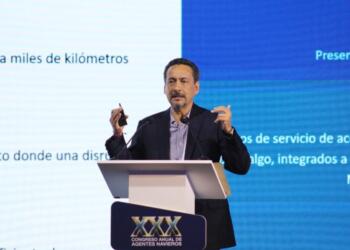
JIUTEPEC, MOR.- The electrification of freight transport in Mexico is progressing, but not at the pace set by the global trend. The main obstacle is not the availability of units, but everything surrounding them: infrastructure, energy, and operation, stated Óscar Zubiría, commercial director of BYD Trucks Mexico .
During the 4th Meeting on Technology and Sustainable Mobility of the National Association of Private Transport (ANTP) , he said that the transition is not limited to replacing combustion trucks with electric ones , but involves building a complete ecosystem that allows them to function.
This includes everything from defining routes and range to charging schedules, the type of infrastructure available, and the energy capacity of each distribution center, Zubiría indicated.

One of the most sensitive issues is energy . In Mexico, not all centers have the necessary electrical capacity, which forces projects to be adapted to real conditions, such as operating with different voltage levels (220 or 440 volts), to avoid excessive investments in infrastructure.
Added to this is a structural challenge: energy generation and availability. Although the sector is beginning to open up again, companies still face the need to invest in their own solutions, such as solar panels and storage systems, to guarantee efficient supply at a lower cost.
In this sense, energy storage is a key component. The ability to capture energy, store it in batteries, and use it during charging allows for cost optimization and reduced dependence on the electrical grid.
Infrastructure and operation: the real barrier
The deployment of electric fleets also requires a detailed operational analysis. Factors such as daily mileage, downtime, and charging schedules determine the type of infrastructure needed, as well as the project’s viability, the specialist explained.
Even the use of smart chargers, which schedule charging at specific times, can make a difference in energy efficiency and operating costs.
In economic terms, the financial model remains a key decision point . Companies must evaluate options such as leasing, direct investment, or financing, in addition to considering factors like accelerated depreciation for these types of assets, the executive emphasized.
Costs and operational advantages
Despite the barriers, clear advantages are already being seen in segments such as last-mile delivery . In local operations, electric vehicles can reduce operating costs by up to 70% compared to combustion engine vehicles, provided they are used under appropriate infrastructure and operating conditions.
This explains why electrification is concentrated on urban routes, where current ranges — of around 350 to 400 kilometers — are sufficient to cover daily operations, Zubiría explained.
Another key challenge lies in operational adoption . The transition requires training not only operators, but also maintenance and administrative staff , to ensure the correct use of the technology and prevent failures that impact operations.
Lack of training can even affect the lifespan of critical components such as the battery, whose degradation depends largely on usage and charging practices, he indicated.
In this sense, the lifespan of the batteries —estimated at up to eight years— also opens the door to a second life in energy storage applications, which could improve the return on investment.
Under these conditions, the electrification of transportation in Mexico is shaping up to be a gradual process. Currently, its development is concentrated on the last mile, where operational conditions favor its implementation, Zubiría commented.
Rather than an immediate and widespread adoption, the sector faces a transition that will depend on its ability to integrate technology, energy, and infrastructure into a single operating model.
Comment and follow us on LinkedIn: @Karina Quintero / @GrupoT21