The Strategic Fiscal Zone (RFE) customs regime in Mexico faces a turning point that highlights the gap between the new regulatory framework and its operational viability. The entry into force of the reform to the Customs Law on January 1, 2026—and, more specifically, the activation of Article 86-A, Section III , on April 1—introduced an obligation that, in practice, cannot be fulfilled: guaranteeing duties through customs guarantee accounts or letters of credit without a functional financial mechanism in place. The result has been an immediate disruption to the operation of a system that, prior to the reform, functioned as a key component for logistics, distribution, and the integration of production processes in Mexico.
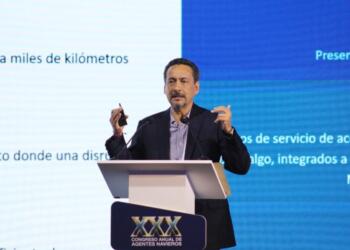
“Currently, there is no financial instrument that we, as Strategic Fiscal Entities (ARFE), can use to comply with this article,” warned Zaira Padilla, president of the Association of Strategic Fiscal Entities (ARFE) , in an interview with T21, describing a problem that is not limited to a technical adjustment but has escalated into an operational standstill. “From April 1, 2026, to the present, these services have been paralyzed , since there are no secondary guidelines (…) the banks say, ‘I don’t know how to use it.’”
The impact is particularly concentrated in facilities dedicated to handling, storage, and safekeeping , which constitute the majority of the country’s RFE (Regional Economic Facilities) and play a critical role in supply chains. Unlike RFE focused on manufacturing, processing, or repair—where the impact of Article 86-A is not direct—these facilities operate as logistics centers that allow for the labeling of goods, compliance with regulations such as Mexican Official Standards (NOMs), cargo deconsolidation, avoidance of port costs, and the redistribution of products to different markets.
Historically, their role has been to provide flexibility to the system. “These other facilities, those that handle, store, safeguard, display, sell, and distribute goods, are the most numerous throughout the country , and we serve as an operational and logistical outlet. For example, a distribution center in Monterrey, where merchandise arrives from abroad, can offer pick and pack services , labeling, and you can combine products from different countries and then disperse your distribution,” Padilla explained, detailing the operational logic that is currently disrupted.
As of January 16, 2026, the Tax Administration Service (SAT) had a record of 61 RFE administrators (industrial parks) that house 54 RFE operators (companies).
The underlying problem lies not in the obligation itself, but in its incompatibility with the dynamics of the system. Unlike other scenarios where financial guarantees are already used—such as estimated prices or transit—the RFE (Register of Excise Duties) involves complex merchandise flows, with multiple entries, partial exits, and inventory replenishment. “The financial instrument of a customs guarantee account and a letter of credit does exist in banks; however, they are not specifically designed for RFE . We can have multiple entries and multiple exits. That customs declaration might be combined with eight other declarations from the same client, and we make a withdrawal of three pallets. We asked the banks, and they said, ‘No, I don’t have a mechanism to use this scheme that exists in the banking system and is commonly used for these other operations. I don’t have those mechanisms to use with you under this different arrangement.’”
The lack of operational implementation has resulted in a disconnect between authorities, the financial sector, and operators. Although the industry anticipated the problem and held working groups prior to its implementation, the rollout was not on time. “ We have been constantly meeting with different authorities at these working groups to express our concerns about the problem, precisely because we had already spoken with the banks and they told us, ‘We are requesting feedback from the authorities; we don’t have a statement ready, we don’t yet have the specific product required to operate.’”
In parallel, the reform introduced other adjustments that have also strained operations, such as the requirement to operate only with customs brokers certified as Authorized Economic Operators (AEOs) or registered carriers—registrations that are not fully available at all customs offices or that do not explicitly consider the nature of the RFE (Registered Freight Forwarder). However, even with these restrictions, the industry has continued to operate. The difference, in this case, is that the financial obligation has proven materially impossible to meet.
“ We have RFE literally at a standstill operationally , because, although we want to comply with what is established in the (Customs) Law, there is no financial mechanism to be able to do so, that is, materially I cannot comply with what the law says, it is really a problem that we are seeing in the day-to-day dynamics,” said Padilla, emphasizing that the problem is not one of resistance to compliance, but of practical unfeasibility.
The impact is already being felt in the reorganization of logistics operations and in disruptions to various productive sectors. “Customers across all industries, for example, from different types of industries that use or were using these RFE schemes until recently, are seeing their supply chains affected ; we are impacting supply chains because there are many customers, for example, in the automotive industry, we have retail customers , we have customers who are the end consumer.”
The paradox is that the regime currently facing these limitations is, at the same time, one of the most closely monitored within the Mexican customs system. “We have been complying with the requirements for strategic bonded warehouses for many years; we have control and security guidelines , cameras, and inventory control systems linked to the authorities, so we should at least receive a balanced treatment in terms of obligations,” he argued.
From the sector’s perspective, the problem isn’t strengthening controls, but rather the lack of balance with facilitation. ” Control (by the authorities) isn’t bad, nor is review , but we must have a balance between customs facilitation and customs control. We have to find that balance and, above all, consider risk management.”
The tension even extends to the regulatory design itself. The country incorporated the RFE (December 2002) as a tax deferral scheme, but at the same time, the current reform to the Customs Law imposed an operational burden that now limits its use.
Ultimately, what is at stake is not only the operation of the facilities, but the viability of a figure that has been key to attracting investment and the country’s logistical competitiveness .
For now, the sector maintains a dialogue with the authorities, hoping that implementation will find a balance that allows operations to resume without weakening control objectives. “It’s not that we don’t want to comply, it’s simply that the financial mechanism and guidelines to do so simply don’t exist, ” Padilla concluded, in a statement that encapsulates the current gap between the law and its implementation.
Comment and follow us on LinkedIn: @Enrique Duarte Rionda / @GrupoT21