Short-term ocean freight rates on the Asia-Mexico and West Coast of South America (WCSA) route closed May at levels not seen since the rebound recorded at the beginning of 2016 and could exceed the barrier of five thousand dollars per 40-foot container (FEU), in an environment marked by capacity restrictions, high demand and increasing operational pressures in the shipping market.
According to the monthly EAX index report, prepared by Eternity Group Mexico , the index closed May at $3,488 per FEU , a 26.33% increase compared to the previous month. However, the acceleration observed during the final weeks of the period allowed market prices to surpass $4,500 per container by the end of the month, anticipating further increases in the coming weeks.

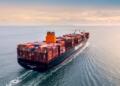
The main trigger for this new surge was the combination of operational delays caused by the Labor Day holiday in China , celebrated between May 1 and 5, and a significant reduction in capacity by shipping companies. In less than a month, shipowners withdrew more than 10 vessels from services connecting Asia with Latin America, a move that quickly altered the balance between supply and demand.
The speed with which these adjustments were implemented reflects a structural change in the maritime industry, where shipping lines now have a greater capacity to adapt their service networks and manage available space according to market conditions.
Following the resumption of operations in China in mid-May, rates began to fluctuate between three and four thousand dollars per FEU. As the month progressed, high vessel occupancy drove further increases, prompting numerous importers to seek to secure available space for critical cargo and seasonal goods.
This situation has begun to generate concern among maritime transport users due to the possibility of facing a new cycle of increased logistics costs just as the peak shipping season begins. Eternity Group’s analysis identifies a concentration of demand for priority products, whose owners are willing to pay higher rates to guarantee the shipment of their goods.
At the same time, the reduction in capacity has led to frequent changes in transit times, making logistics planning more difficult and forcing shippers to make decisions further in advance to avoid disruptions to their supply chains.
In addition to operational restrictions, there is the international geopolitical context. The report highlights that fuel represents between 20% and 25% of a shipping company’s operating costs and is currently above $90 per barrel due to tensions in the Middle East, well above the historical levels below $60 seen under normal conditions.
This increase in energy costs has encouraged shipping lines to prioritize corridors with better profit margins, which has contributed to the redistribution of capacity and upward pressure on various trade routes.
Under these conditions, Eternity Group anticipates that June will be a particularly challenging month for importers and exporters . The expectation is that rates will continue to rise week after week and that container availability will remain limited due to strong demand and difficulties in returning empty containers to Asia.
If capacity restrictions and the current level of demand persist, the market could trade above five thousand dollars per FEU in the coming weeks, consolidating one of the periods of greatest tariff tension observed in the transpacific corridor to Latin America in recent years.
Given this scenario, the analysis recommends avoiding speculative strategies when dealing with critical cargo and reinforcing logistics planning processes at least three to four weeks in advance. It also emphasizes the need for greater precision in defining the Cargo Ready Date (CRD) , as any modification can significantly increase the risk of losing previously reserved slots.
Meanwhile, the industry’s global capacity continued to grow. In May, an additional 140,317 TEUs (twenty-foot equivalent units) entered the market with the delivery of new container ships. CMA CGM led these additions, bringing 40,348 TEUs into its fleet with the commissioning of two large vessels.
The upward trend was also reflected on the Asia-East Coast of South America (ECSA) route , where the EAX index reached $4,219 per FEU, equivalent to a monthly increase of 36.61 percent. The performance of this corridor confirmed that tariff pressures extended beyond the Mexican market and revealed an unusual disconnect between available capacity and observed freight levels, pushing rates to their 2026 highs.
Comment and follow us on LinkedIn: @GrupoT21