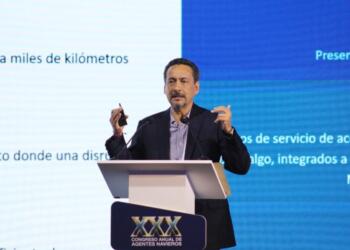
The sale of IPA Steel Terminal to the Canadian company Logistec was not the result of a divestment strategy, but of an opportunity that arose in an operation that, for more than 17 years, had been built under a different logic: organic growth, constant reinvestment and specialization in the handling of steel and general cargo in the port of Altamira.
“We weren’t for sale, we were never for sale,” Jurgen Hess maintains in an interview, recounting the origins of a negotiation that took even its own executives by surprise. The terminal, founded in 2009, had been on an upward trajectory, moving from 400,000 tons in its first year to peaks of nearly three million tons, a process marked by continuous investments in infrastructure, equipment, and security.
That positioning—as one of the key players in Altamira—was precisely what attracted Logistec. According to a statement released in mid-February of this year, the Canadian firm finalized the acquisition of 100% of Inmobiliaria Portuaria de Altamira (IPA) and all its units in the port of Altamira, Tamaulipas, marking its entry into the Mexican market and, in the long term, its platform for expansion into Latin America.
The initial approach, however, wasn’t aimed at that. Just over a year ago, the conversation began as a potential business partnership. “We told them they were welcome to form an alliance, but we weren’t looking to sell or bring in partners,” Hess recalls. The evolution toward a full acquisition was the result of an intensive negotiation process and thorough due diligence that, in the executive’s own words, reviewed “absolutely everything” and confirmed the terminal’s operational, administrative, and financial stability.
The turning point came when the proposal escalated from a partial stake to a full acquisition. This decision was also influenced by the natural departure of some original partners—particularly more passive investors—and the opportunity to integrate the terminal into an international network . Even so, the decision wasn’t easy. “It’s the legacy my father (Rudolph Hess) left us. Christian (my brother) and I were the ones who built and grew the business,” admits Hess, acknowledging the emotional component of the transaction.
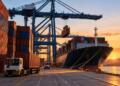
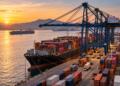
Beyond the transaction itself, IPA’s operation reveals why it became such an attractive asset. The terminal boasts a 273-meter pier—currently being expanded —nearly 200,000 square meters of storage space across its various facilities, a rail spur capable of handling up to 40 gondolas in staggered operations, and a fleet of cranes and forklifts designed for heavy loads.
Comment and follow us on LinkedIn: @Enrique Duarte Rionda / @GrupoT21