LOS CABOS, BCS – Productivity is no longer measured solely in movements per hour. At the XXVII Intermodal Congress of the Mexican Intermodal Transportation Association (AMTI) , port operators, shipping companies, and railway companies agreed that the true challenge for the Mexican logistics chain is no longer building more capacity, but rather ensuring that all links operate in a connected manner , with traceability and predictability.
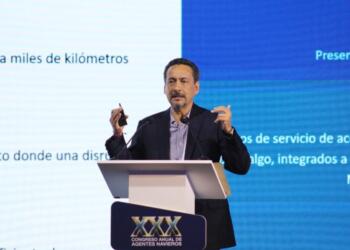
During the panel “Infrastructure that connects: productivity in motion”, moderated by Francisco Fabila, general director of Ferrocarril y Terminal del Valle de México (Ferrovalle) , the participants outlined a shared diagnosis: Mexico has world-class port and rail infrastructure, but the lack of technological and operational integration continues to generate uncertainty for intermodal users.
“The challenge is not basically to create more capacity, it’s not to build more capacity than we already have. At good levels of productivity, we still have capacity, we have solid operational talent , and world-class infrastructure. I think what we lack is integration,” stated Héctor Espinoza, Director of Operations for Mexico and Central America at Mediterranean Shipping Company (MSC) .
The conversation revolved around a recurring concept: the customer no longer demands just speed, but certainty . Iker Allison, Vice President of Marketing at SSA Marine Mexico , one of the country’s leading port operators, summarized one of the industry’s biggest challenges: “The customer can tolerate a one-day delay. What they can’t tolerate is uncertainty, not knowing when their container will arrive.”
Following this logic, the panelists agreed that productivity is no longer exclusively associated with throughput or hourly transaction records at terminals. Now, the focus is on the overall user experience and the ability of the entire supply chain to deliver reliable, real-time information.
“Giving them the possibility at all times, from end to end, of that predictability and consistency is what we prioritize today,” Espinoza added, noting that traditional operational metrics have begun to lose relevance compared to the need to guarantee complete cargo traceability.
Daniela Silva, Chief Commercial Officer of APM Terminals Mexico , explained that one of the most demanded factors by intermodal users is precisely the constant visibility of operations . “Having real-time information, accessible 24/7,” she noted, “has become an indispensable element in modern logistics.”
However, the panel agreed that technology alone will not solve the supply chain’s structural problems. Although each actor has developed platforms, monitoring systems, and digital tools, the lack of communication between them continues to generate friction.
“If there were true interconnectivity through systems and the customer received a single response, then that would eliminate uncertainty ,” Allison stated. He noted that it is still common for a terminal to report that a container has already been loaded onto the railcar while the rail operator maintains that the container has not yet appeared in their system.
This disconnect is also reflected in customs processes . During the panel, it was highlighted that, despite advances in digitization, most users continue to experience delays and intermittent service on government platforms. “How can you provide a predictable, repeatable service when the system is down?” Fabila asked, referring to the challenges still facing the Single Window for Foreign Trade (Vucem).

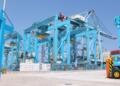
The discussion then shifted to automation and the use of artificial intelligence within port terminals. Silva highlighted that APM Terminals operates the only 100% automated yard in Latin America in Lázaro Cárdenas , equipped with OCR systems and traceability tools developed both globally and locally.
“ Technology is another ally . Logistics never stops. So, creating tools that allow the customer to have 24/7 access to information is fundamental,” he stated.
For Fabila, technological advancements have already radically transformed logistics operations. “Today, logistics is a watershed moment in how technology can bring operational efficiency to our processes,” he stated, describing the impact of automated terminals and the use of artificial intelligence in cargo recognition and handling.
But even in an increasingly automated environment , the panelists insisted that the main bottleneck remains coordination between actors. “The development we may achieve as isolated entities means nothing if all the actors in this chain do not also increase their productivity,” Allison warned.
Meanwhile, the companies confirmed their continued commitment to Mexico with new expansion projects. Silva noted that APM Terminals recently inaugurated Phase 2 of its expansion in Lázaro Cárdenas, adding 65 hectares and new automated cranes, and announced a third phase focused on extending the dock by 420 meters .
“We believe that Mexico is a potential market and we believe in its development,” he said.
Despite a global environment marked by economic uncertainty and trade tensions, participants were optimistic about the performance of the second half of the year and the upcoming peak season .
“We are expecting a very good , positive peak season and we are preparing for that,” Allison commented, while Espinoza assured that MSC maintains a “very robust capacity” and a long-term commitment to the Mexican market.
The discussion also addressed the challenge of increasing rail’s share of freight movement from ports. Participants felt that the potential of intermodal transport remains underutilized and requires greater promotion of its operational and environmental advantages.
“There is enormous value in rail transport ,” Silva stated. “It’s about how we incentivize the use of rail by showing real advantages for the customer.”
Sustainability emerged as another strategic focus for the industry. SSA Marine highlighted that the terminal they acquired in Manzanillo was the first fully electrified terminal in the country, while APM Terminals stated that by 2026 it will operate with 100% clean energy in Lázaro Cárdenas and will develop electrification projects in Progreso.
Finally, Fabila proposed a change in perspective regarding the role of port terminals . “Terminals should be conceived as transfer spaces, not storage facilities,” he argued, maintaining that true intermodal efficiency depends on keeping containers flowing constantly and minimizing their time spent within ports.
Beyond the multimillion-dollar investments in infrastructure, automation, or expansion, the panel reached a clear conclusion: the future of Mexican intermodal transport will depend less on building more capacity and more on ensuring that the entire logistics chain finally operates as a single system.
Comment and follow us on LinkedIn: @Enrique Duarte Rionda / @GrupoT21