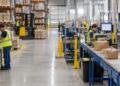
Grupo Coppel ‘s logistics strategy in Mexico began to shift in 2022, when the company decided that the growth of its operations had to be accompanied by a tangible reduction in its environmental footprint. The response wasn’t limited to modernizing processes or incorporating new technologies: it involved rethinking how its imported goods travel across the country, moving a growing proportion of containers from the ports of Ensenada and Lázaro Cárdenas to its distribution centers via intermodal transport, with rail as the backbone
“ The main motivator was the issue of CO2 emissions , more than the issue of cost or savings,” says Angélica Bojórquez, Corporate Director of Supply Chain at Grupo Coppel, in an interview with T21, who notes that the company is currently positioned as the third largest importer in the country.
The shift is significant considering the company’s logistical scale. In 2025 alone, its primary fleet covered 74 million kilometers and moved 23,000 import containers (both by road and rail), merchandise that represents nearly 40% of the almost 100,000 SKUs (Stock Keeping Units) it sells.
In this context, rail has become a strategic ally for connecting maritime routes with the country’s logistics hub, especially on routes exceeding 600 kilometers, where the environmental and operational impact of road transport is most significant. The results are measurable: in 2025, the use of intermodal transport reduced CO2 emissions by 8,518 tons , with a cumulative reduction of 35,828 tons since the strategy’s inception.
Comment and follow us on LinkedIn: @Enrique Duarte Rionda / @GrupoT21