Airports and Auxiliary Services (ASA) announced that over the next five years it will allocate resources to improve its fuel distribution infrastructure, in addition to participating in other businesses such as Mexicana’s MRO and biofuels .
“Participate in a partnership for the acquisition and operation of Mexicana’s aircraft maintenance base (MRO), in order to contribute to the connectivity and development of the aeronautical sector in our country,” the organization indicated, without giving further details, in its 2025-2030 Institutional Program , released to the National Commission for Regulatory Improvement ( Conamer) .
The above, he explained, is part of his new goals to enter strategic areas of air transportation by providing specialized services, advice, and technical consulting with the goal of strengthening the aviation sector.
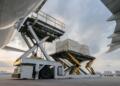
Likewise, it announced that it will invest in priority infrastructure, such as new fuel stations and expanding the capacity of others . It will also renew its specialized equipment to provide highly qualified service through sustainable, efficient, and safe operations that comply with international standards.
“In this way, ASA will maintain its leadership in the aviation fuel market, helping to ensure that the benefits of progress are distributed more equitably throughout the country. It will also contribute to closing regional development gaps, guaranteeing quality services, and strengthening national energy security,” he stated.
To this end, it will increase the storage capacity of fuel stations in Oaxaca, Querétaro, Ciudad Juárez, and the Bajío region, in addition to building a tanker truck shuttle in polygon 2 of Mexico City International Airport (AICM) .
It will also complete the modernization of the infrastructure of the fuel station storage system in Cancún, the construction of new fuel stations in San José del Cabo, Tepic, and Puerto Escondido, the replacement of the turbo-sino pipeline at Terminal 1 of the AICM, and the renewal of the supply vehicle fleet.
Regarding sustainable aviation fuels , ASA will promote the development of infrastructure for storage and blending, with the construction of two bioturbosine centers in Mexico City and Cancun .
The agency noted that starting in 2027, eight Mexican airline operators must monitor, report, verify, and offset their greenhouse gas (GHG) emissions, and net-zero emissions must be achieved by 2050 .
“Failure to comply with these agreements will continue to increase greenhouse gas emissions, reduce the ability to attract investment and tourism, and Mexico will lose competitiveness compared to countries with advanced sustainable aviation fuel (SAF) policies,” he stated.
He asserted that the lack of this type of fuel could limit the operations of international airlines in the country , in addition to putting Mexican airlines at a disadvantage compared to those that already use it.
In the case of specialized aeronautical personnel and in light of the deficiencies in training and certification, the Ministry will seek to create educational options by strengthening its International Training Center (CIIASA) and creating the Division of University and Postgraduate Studies.
“(It) contemplates the training of 150,000 professionals annually in strategic sectors, with the conviction that the country has the talent, capacity, and resources to consolidate itself as one of the most dynamic economies in the world,” he said.
Comment and follow us on X: @evandeltoro / @GrupoT21