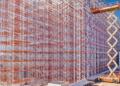
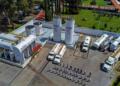
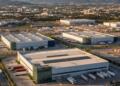
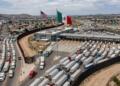
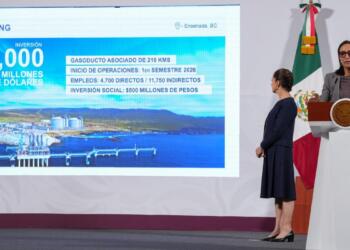
Announcements of Foreign Direct Investment (FDI) projects in Mexico in the transportation and storage sector for the period 2020-2024 amounted to more than one billion dollars (mdd), on average, per year, revealed the Economic Commission for Latin America and the Caribbean (ECLAC) , which detailed that in the countries of the region the industry received only 3% of the total of these investments last year.
According to the Foreign Direct Investment in Latin America and the Caribbean 2025 report , prepared by the aforementioned organization, investment announcements in the logistics sector in Mexico averaged close to two billion dollars per year from 2010 to 2019.
 At the report’s presentation, José Manuel Salazar-Xirinachs, Executive Secretary of ECLAC, emphasized that Mexico has a positive investment environment, as well as clusters for economic development and a strong logistics chain.
In this regard, he emphasized that the country is best positioned to attract FDI in Latin America and the Caribbean within the framework of the phenomenon of relocation of production lines, known as nearshoring .
According to the report, Mexico received the second-largest amount of FDI in the region in 2024, with net inflows of $45.337 billion, representing a 48% increase compared to 2023 and the highest annual figure since 2013.
José Manuel Salazar-Xirinachs noted that the integration of the Mexican economy with that of the United States under the context of nearshoring could pose risks, especially due to the recent economic policies promoted by its northern neighbor. However, there is also “a great deal of common interest between the two countries.”
In terms of sectors, manufacturing was the largest net driver of FDI in Mexico, experiencing a 10% increase in inflows compared to 2023 and also accounting for 53% of the 2024 total.
For his part, Marco Llinás, director of ECLAC’s Productive and Business Development Division, believes that FDI in Mexico will increase as the country improves its efforts to attract foreign capital through Plan Mexico , especially given the economic uncertainty affecting the world due to protectionist policies.
According to the ECLAC report, FDI in Latin America and the Caribbean in 2024 reached 188.962 billion dollars (mdd) , which represented an increase of 7.1% compared to 2023.
The 2024 growth in FDI components was driven by transnational corporations already operating in the region, mainly due to increases in profit reinvestment, while capital inflows remain stagnant.
In 2024, FDI inflows increased in the Caribbean, Central America, and Mexico, while results in South American countries were mixed. Brazil saw a 13.8% increase in FDI inflows, while Mexico saw a 47.9% increase in the period.
“At ECLAC, we believe that Latin America and the Caribbean must leverage foreign direct investment to achieve more productive, inclusive, and sustainable development. To achieve this, it will be key to use FDI as a strategic tool within productive development policies,” emphasized José Manuel Salazar-Xirinachs.
According to the report, during the reference period, there was an increase in FDI inflows to manufacturing and a decrease in the services sector, with the share of FDI in both sectors remaining similar, at 43.6% and 40.4%, respectively.
The analysis indicated that the United States consolidated its position as the largest investor in Latin America and the Caribbean, with 38% of the value invested in 2024, and the European Union’s share fell to 15% of the regional total, representing the lowest figure since 2012. Meanwhile, FDI from China accounted for just 2% of total inflows in 2024.
Meanwhile, regarding the behavior of Latin American transnational corporations, known as translatinas, the report showed that outward FDI from the region increased 47% last year, reaching $53.033 billion . Brazil was the largest investor abroad, accounting for 46% of the total, while investments from Mexico showed the greatest growth.
The report also highlighted FDI in the mining sector. Between 2005 and 2024, 1,152 project announcements were made, totaling US$230,065 million.
Furthermore, the analysis highlighted that while there has been progress in digitalization in Latin America and the Caribbean, significant gaps in technological adoption persist .
Mexico and Brazil accounted for 32% and 29%, respectively, of the FDI associated with project announcements accumulated between 2005 and 2024. When Argentina, Chile, and Colombia are added, this group of countries accounts for more than 80% of the total in the region.
It is worth remembering that during the first quarter of 2025, Mexico reached 21.4 billion dollars (mdd) in Foreign Direct Investment , which meant an increase of 5.4% compared to the same period in 2024, according to the Ministry of Economy .
Comment and follow us on X: @Eliseosfield / @GrupoT21