Mexico no longer competes solely on cost or location: it competes on the efficiency and resilience of its supply chains. Amid the rise of nearshoring and the pressure of increasingly demanding markets, logistics has ceased to be merely an operational link and has become a decisive factor in competitiveness.
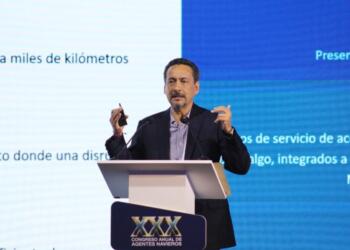
For Sergio Morales , president of the Mexican Association of Logistics Operators (AOLM) , the country not only faces higher levels of operational complexity, but also a historic opportunity to consolidate itself as a key node in global trade.
“In a Mexico that is consolidating itself as a global logistics hub , our responsibility is clear: to be the strategic partner that drives competitiveness, guaranteeing more agile, secure, and technologically prepared operations for the future. That, in essence, is the mission we undertake every day,” he explains in an interview.
Added to this is the effect of nearshoring , which has placed Mexico in a strategic position within international flows.
In this context, the role of the logistics operator has evolved substantially. It is no longer simply about executing processes, but about enabling the competitiveness of companies. From highly regulated sectors like pharmaceuticals to industries like automotive, retail , and e-commerce , logistics has become a critical factor in ensuring operational continuity, efficiency, and regulatory compliance.
Morales sums it up clearly: the modern logistics operator designs comprehensive supply chain architectures , integrates technology, generates economies of scale, and transforms complexity into efficiency.
Given this scenario, the AOLM’s agenda under its new presidency will focus on three key areas : boosting the sector’s competitiveness, promoting professionalization and innovation, and strengthening collaboration between companies, industry, and authorities.
Comment and follow us on LinkedIn: @Jennifer Galindo / @GrupoT21