Before a shipment even hits the road , the company has already started paying . Not for fuel, tolls, or maintenance, but for cameras, monitoring, insurance, alternate routes, and security protocols. The cost of insecurity begins before a robbery and weighs increasingly heavily on companies’ competitiveness.
Insecurity is no longer just a financial loss ; today it’s part of the cost of doing business in Mexico. The 2024 National Survey of Business Victimization (ENVE) by the National Institute of Statistics and Geography (Inegi) estimates that in 2023, insecurity and crime cost businesses 124.3 billion pesos (MXN), equivalent to 0.51% of GDP.
The average cost per victim company was 54,451 pesos, while for large companies it reached 1.37 million pesos annually. A large portion of this cost corresponds to preventative measures such as cameras, alarms, access controls, and security systems.
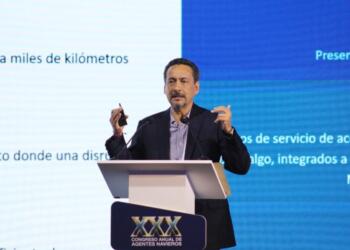
The impact goes beyond transportation and reaches the entire supply chain, as identified by Javier Cendejas, president of Comce Noreste .
“The impact isn’t just on carriers. It jeopardizes just-in-time deliveries for the automotive industry, affects retail supply, can disrupt production lines, and reduces confidence for foreign investment. Road safety is a direct factor in national competitiveness,” he states.
México Cómo Vamos warns that violence and the weakness of the rule of law reduce competitiveness, raise operating costs and limit opportunities such as nearshoring , turning security into an economic factor.
They disrupt their operation
Change is no longer an expectation; it’s part of daily operations. The survey “Impact of Insecurity on Freight Transportation in Mexico,” conducted by T21 Business Intelligence , reveals that 100% of the companies surveyed suffered at least one robbery in the first quarter of 2026, and that the insecurity perception index reached 8.65 out of 10.
The T21 survey also shows that 95% of companies attribute the resignation of operators to insecurity, while 80% identify assault on the driver as the most frequent incident and 70% report the total theft of the unit.


This comes at a time when Mexico faces an estimated shortage of 99,000 truck drivers and insecurity is making the profession increasingly unattractive. “Today, drivers face kidnappings, illegal detentions, and extortion,” says Héctor Romero, advisor to the National Council of Executives in Logistics and Supply Chain (ConaLog) .
*A report by Jennifer Galindo and Karina Quintero .
Comment and follow us on LinkedIn: @Jennifer Galindo / @Karina Quintero / @GrupoT21