Companies that store diesel or gasoline to supply their own fleets or use it in their industrial processes face a scenario of regulatory uncertainty. Depending on how they receive, store, and use the fuel, they may require a dispatch permit for self-consumption, a permit for storage for their own use, or even no authorization at all.
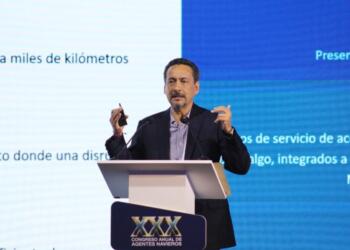
During the webinar “Dispatch of self-consumption and storage for own use” , organized by the Mexican Association of Energy Distributors (AMDE) and PETROIntelligence , Alejandro Montufar Helu, general director of the latter firm, explained that the main challenge for companies is that there is no single answer, since the regulatory obligation will depend on the characteristics of each operation and the installed infrastructure.
The specialist explained that the new Hydrocarbons Regulations distinguish three categories. The first is dispatch for self-consumption, applicable when a company stores and supplies fuel to its own vehicles related to its economic activity, as occurs in companies in the trucking, mining, construction, or railway sectors.
The second category is for on-site storage , intended for fuel used directly in industrial equipment or processes, such as boilers, emergency power plants, or stationary machinery. The third category is for end-user storage, when the fuel is supplied directly by an authorized distributor and the company does not have its own storage infrastructure.
However, he pointed out that in practice there are operations that don’t clearly fit into a single category . In that regard, he mentioned mining facilities where fuel is used to supply vehicles and industrial machinery, and is also transported between different sites—situations that could require more than one permit.
“The answer is not simple because it depends on the operating method, technical criteria, and we are also facing a regulatory framework that continues to evolve,” he stated.
During the presentation, it was also explained that, to date, no permits have been granted for self-consumption storage . The permits issued so far are solely for dispatch for self-consumption, and the National Energy Commission (CNE) platform continues to use forms from the previous system to receive these types of applications.

Regarding the behavior of the permits, it was noted that during the first six months of 2026, 23 authorizations for dispatch for self-consumption were granted, all with a validity of 10 years, although the regulation establishes a maximum term of 15 years.
Furthermore, the analysis of 17 permits authorized between October 2025 and June 2026 shows investments ranging from 450,000 pesos to 30.58 million pesos and storage capacities between 25,000 and 150,000 liters. Most of the facilities evaluated occupy areas of less than 2,500 square meters and have only one dispensing module.

It was also identified that the main causes of rejection of applications have been related to documentary inconsistencies , particularly the lack of accreditation of possession or authorization of the property where the infrastructure will be installed.

Another topic discussed was the progress of a regularization program promoted by the CNE, which includes conducting a census of dispatch facilities for self-consumption, preparing a diagnosis of the sector and initiating regularization processes for this type of operation.
Montufar Helu indicated that companies should not assume that using fuel for their own operations automatically exempts them from permits. The classification will depend on the installed infrastructure, the fuel’s destination, and how the operation is carried out.
In that regard, it recommended a detailed review of the processes for receiving, storing, and supplying fuels, as well as documenting the characteristics of each facility and requesting a specific analysis when there are doubts about the applicable regulatory framework, while the authority completes the development of the pending provisions.
Comment and follow us on LinkedIn: @Karina Quintero / @GrupoT21