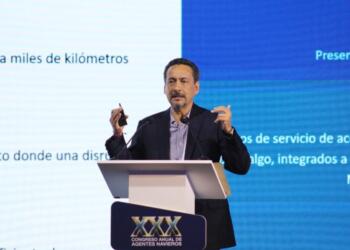
Pacific International Lines (PIL) has made a key change in its Mexican operations. Brenda Santiago has assumed the general management of the shipping company in the country , at a time when the maritime market is facing operational pressures, tariff adjustments, and increasingly intense competition on the Asia-Mexico route.
The announcement was made by the executive herself through her LinkedIn profile , where she stated that she is starting “a new chapter” in her professional career.
“I am pleased to share that I am beginning a new chapter as Managing Director for Mexico at PIL Pacific International Lines (PTE) Ltd.,” she posted. The transition, she explained, comes after “many years in a role that shaped me both professionally and personally.”

The message also reveals the tone of the challenge she is taking on. “It’s a role that comes with real challenges, and I’m ready for it ,” she added, in an environment where shipping companies have had to adjust their strategies in the face of volatile demand and cost pressures.
In terms of experience, Santiago comes to this position with a background in global shipping companies, particularly CMA CGM , where he has developed his career in various roles within the maritime business , with exposure to both the Mexican market and international operations. His profile also reflects active participation in business development and training initiatives within the logistics sector.
Although the strategic priorities under this new leadership have not been publicly detailed, the move comes at a time when Mexico remains a relevant market within the transpacific network, particularly due to its connection with Asia and the dynamism of its imports.
The change in local management is part of a strategy the company itself has been developing in recent years. According to an analysis published by T21 magazine in its June 2025 edition , PIL has focused on expanding its presence in Latin America , with Mexico as one of its priority markets.
After overcoming a financial restructuring process prior to the pandemic – which included the entry of Heliconia Capital, from the Temasek group of Singapore, as majority shareholder – the shipping company resumed an expansion plan focused on the region, according to what was said at the time by Andrés Poveda, the former general manager in Mexico of PIL .
In that context, the company decided to strengthen its direct presence in key markets such as Brazil, Mexico, Peru and Guatemala , leaving behind a model more dependent on agents to assume strategic functions such as commercial relations, customer service and operational management.
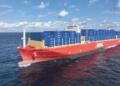
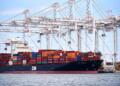
The stakes are high. PIL ranks as the twelfth largest shipping company in the world , with a capacity of 442,216 twenty-foot equivalent units (TEUs) and a fleet of 99 container ships, according to Alphaliner. This scale allows it to compete on key routes, although it still lags behind the global giants of the sector.
In Mexico, the company has sought to position itself with services focused on the Asia-Pacific route , both through alliances and with its own routes that connect ports such as Manzanillo and Lázaro Cárdenas .
Within that plan, the company has even set specific market share targets, seeking to reach between 4% and 5% in Mexican Pacific ports , a territory dominated by large global players.
A relay that tests the strategy
In this context, Brenda Santiago’s arrival as general manager in Mexico not only represents an organizational change, but also a test for PIL’s growth strategy in one of the most competitive markets in maritime trade.
The challenge will be clear: to transform the expansion planned in recent years into a more robust operation , closer to the customer and capable of gaining ground in an environment where scale, reliability and service make the difference.
Comment and follow us on LinkedIn: @Enrique Duarte Rionda / @GrupoT21