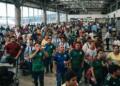
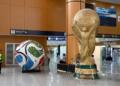
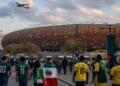
The World Cup ended with Spain’s victory. Before the biggest edition in history began, with 104 matches across its various stages, 13 of them in Mexico , there was considerable anticipation regarding its potential impact on the economy, and consequently on transportation and logistics.
According to Deloitte , it was estimated that the World Cup could raise Mexico’s economic growth from 1.3% to 1.4% in 2026 , with an economic impact of up to four billion 050 million dollars (mdd), as referred to in the report: Logistics “out of place” for the World Cup, from last June in T21 .
When reviewing the results of the Transport and Logistics Confidence Index (ICTYL) for the second quarter of 2026 (2Q26), the current question was: “During the quarter, did the holding of the 2026 World Cup have any impact on your company’s operations or results? ”.
In response, 65.5% of the 140 executives and businesspeople who answered this survey stated that it did not have a relevant impact on the development of the football tournament in Mexico, despite the 13 matches held in Mexico City, Monterrey and Guadalajara.

The ICTYL statement is in line with what the National Association of Self-Service and Department Stores (ANTAD) reported regarding the performance of last June, where it was reported that self-service stores decreased their sales by 2.7% in same stores (those that have been operating for more than 12 months) and -0.5% in total stores (those that consider the openings).
In the department store sector , the dynamic was similar, with a drop of 3.7% in same stores and -2.6% in total stores.
In addition to what was reported by ANTAD, there is the BBVA Research Big Data Consumption Indicator (ICBD) , which titled its report: “Limited effect of the World Cup on private spending in June”.
BBVA revealed that private consumption in Mexico fell 0.2% month-on-month in June, with a year-on-year contraction of 4.9%. “The effect of the World Cup was limited and uneven, failing to generate a widespread rebound. Spending on tourism services contracted, while spending on entertainment grew. This sluggishness is expected to persist.”
A closer look reveals that spending on tourism services contracted significantly, with monthly declines of 10.5% in hotels and 4.9% in restaurants . In contrast, entertainment services grew by 16.5% month-on-month, “possibly driven by the World Cup,” BBVA Research noted.
Meanwhile, gasoline spending fell 2.5% month-on-month in June . This figure represents the fifteenth consecutive decline since April 2025 and a year-on-year contraction of 5.6%, pointing to reduced mobility.
These elements confirm some versions of specialists who stated that the fact that Mexico only had 13 of the 104 matches in the tournament would not have a positive effect on the country’s economic activities, a situation that the statistics confirm.
Comment and follow us on LinkedIn: @Didier Ramírez Torres / @GrupoT21