Fuel consumption represents one of the main costs in the operation of motor transport fleets , so improving the performance of the units remains among the points of focus for carriers and manufacturers.
Under this scenario, MAN Truck & Bus has focused part of its strategy in Mexico on powertrain integration and the use of tools that allow managing vehicle performance according to route conditions.
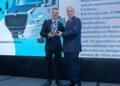
In an interview with T21, Roberto Rodríguez, head of key accounts for MAN Truck & Bus in Mexico, explained that the cost of diesel has a significant impact on operations , and therefore, fuel efficiency is one of the brand’s main focuses.
“The focus on the issue of diesel, undoubtedly, understanding that it is the biggest cost in any of our fleets, is very relevant,” Rodríguez noted.
One of the tools the company is incorporating is EfficientCruise , which uses a topographic map of Mexico to anticipate road characteristics and manage unit performance.
According to Rodríguez, Mexico is the first country outside of Europe to join this platform , whose operation allows the use of torque when road conditions require it and taking advantage of inertia when possible.
The strategy also includes the integration of powertrain components. The executive explained that MAN uses a 12.4-liter D26 engine , an automated transmission whose programming was jointly developed by ZF and MAN, and axles manufactured in-house.
According to Rodríguez, this integration contributes to the company’s focus on fuel economy, in addition to safety-related aspects.
Regarding its commercial performance, MAN registered 23 cargo units sold at retail during July 2026, with a 0.9% share of a market that reached 2,532 units, according to figures from the Administrative Registry of the Automotive Industry of Heavy Vehicles (RAIAVP) disseminated by the National Association of Producers of Buses, Trucks and Tractor-Trailers (ANPACT) .
Adoption also presents challenges
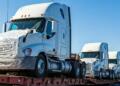
Beyond technology, the executive acknowledged that gaining ground in the Mexican market also presents a challenge, due to the historical presence of conventionally configured vehicles.

“It has undoubtedly been complex. The domestic market is very traditional and obviously uses American-type vehicles, which we call conventional here,” he commented.
Rodríguez explained that one of the ways to advance in this process has been to incorporate units into different fleets so that carriers and operators can test them directly in their operation .
“We’ve managed to get into some fleets to test our truck. There are more and more cab-over trucks on the road, so there’s greater openness,” he said.
He added that, once the units were incorporated, aspects related to safety, comfort, and ergonomics became part of the operators’ experience. This is further enhanced by closer collaboration with key clients to understand fleet needs and make adjustments.
“That interaction has allowed us to improve or refine some points that we have loose ends and give these clients more confidence,” he said.
In this way, MAN’s strategy in Mexico combines the use of tools aimed at improving fuel efficiency with an approach to fleets , in a market where operational performance and diesel-related costs continue to be relevant factors for road transport.
Comment and follow us on LinkedIn: @Karina Quintero / @GrupoT21