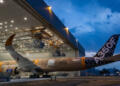
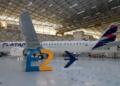
LATAM Airlines Group added 13 state-of-the-art aircraft to its fleet and plans to receive another 28 before the end of 2026, which will close the year with more than 40 new aircraft of this type, strengthening its operational efficiency and capacity.
“Fleet renewal is one of the most important investments we are making as a group, because it allows us to grow more efficiently and better respond to the region’s connectivity needs. South America has domestic markets with enormous potential for development, and having a more flexible and diverse fleet gives us the reach we need to be there,” said Sebastián Acuto, Vice President of Fleet and Projects at LATAM Airlines Group.
By the end of 2026, LATAM projects reaching 410 delivered aircraft , consolidating one of the largest commercial fleets in the world. In the second half of the year, it will continue receiving Airbus A320neo, A321neo, and Boeing 787-9 Dreamliner aircraft , which will be joined, for the first time, by Embraer E190-E2s. These will strengthen the domestic network in Brazil, providing greater operational flexibility to serve different markets.
The fleet renewal plan will continue in 2027 with the addition of new aircraft, including the first Airbus A321XLR that LATAM will operate. This model will allow for expanded range on nonstop medium-haul routes, opening new connectivity opportunities for South America.
By the end of the decade, LATAM plans to add up to 130 additional aircraft from various manufacturers. This will mean that by 2030, more than 50% of its fleet will consist of state-of-the-art models.
These aircraft allow for a reduction of between 20% and 25% in carbon dioxide (CO₂) emissions compared to previous generations, according to data from their manufacturers, in addition to optimizing fuel consumption, contributing to an increasingly efficient operation and to the LATAM group’s commitment to achieving net zero emissions by 2050.
Comment and follow us on LinkedIn: @GrupoT21