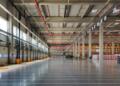
This year, 830,000 square meters (m2) of industrial space will be built in Jalisco, with an investment of 625 million dollars (mdd) , reported the Association of Industrial Parks of the State of Jalisco (APIEJ) , which indicated that they expect a greater boost after the review of the Treaty between Mexico, the United States and Canada (T-MEC) .
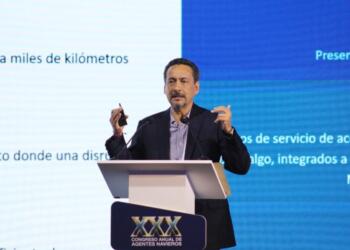
“One of the key points is the definition of the USMCA, regardless of whether there is free trade or not. Mexico will be positioned differently compared to other countries, which benefits us and will shift many production lines; the first thing they look for is suppliers, and that is where we have a great opportunity to position ourselves as Jalisco, in generating or incentivizing local suppliers to serve those companies,” emphasized Bruno Martínez, president of APIEJ.
In an interview with T21, he said that we are not only experiencing a trade war, but also “an industrial revolution” with data centers, artificial intelligence (AI), and robotics, where he sees great potential for the state, as well as in the agri-food, e-commerce , and pharmaceutical sectors . “This is the potential of the market, and it is growing.”
Regarding the estimated investment for 2026, he detailed that these spaces will be divided into 55% for logistics and the rest for manufacturing, in addition to the generation of approximately 19,000 jobs.
He explained that the state’s air connectivity has benefited the logistics sector, although one of the main challenges is energy ; however, the announcement of the new combined cycle plant to be built in the state would allow them to face this challenge, although, he specified that they have sought other alternatives with representatives of the Jalisco Ministry of Sustainable Energy Development so that industrial parks can be self-generators of energy of up to 20 megawatts for their own consumption.
“Another challenge is the lack of standardization in the procedures for developing industrial parks. We have been working with the Ministry of Economic Development for over a year and a half to create a streamlined process, with the goal of standardizing procedures and harmonizing requirements. We have managed to harmonize eight procedures, which allows us to expedite construction, since previously it could take around 700 business days to obtain all the permits, and we have reduced that to 200 days. We have also standardized requirements. We are not trying to circumvent the law, but rather to comply with it efficiently,” he stated.
Bruno Martínez predicted that over the next 10 years, Jalisco will absorb between 400,000 and 600,000 m2 of the demand for this type of space.

He noted that the sector has experienced sustained growth in recent years . By the end of 2025 alone, it had registered 677,000 square meters of new industrial space, representing an investment of just over $500 million.
“It is a very strong dynamic despite the geopolitical issue, the trade war between China and the United States, the tariffs that have affected Mexico, such as Nuevo León, Tijuana, Juárez, markets that slowed down a bit, while Jalisco did not experience that due to industrial diversification,” he indicated.
He explained that the state has more than 20 industries that allow for diversification, and that these sectors have not been impacted by the aforementioned adversities.
Industries such as logistics, high technology, auto parts, and medical devices , among others, Martínez said, allow for greater diversification, and “that means more production lines and chains keep arriving. There is a lot of expansion dynamism, and that makes Jalisco very dynamic. At the same time, we have good connectivity by road, rail, and especially by air.”
The president of APIEJ announced that they will hold the APIEJ 2026 Congress on September 1st and 2nd , where they will bring together participants from the sector to analyze the market, networking , the USMCA, among other topics.
Comment and follow us on LinkedIn: @Evangelina del Toro / @GrupoT21