In its 2025 Global Driver Shortage Report, the International Road Transport Union (IRU) identifies that nearly two-thirds of trucking companies in Mexico face severe or very severe conditions in recruiting qualified drivers. This is in addition to a 14% shortage in this labor segment in the country.
In the case of Grupo HG Transportaciones, the objective of addressing the shortage of operators is not a strategy that was generated to address the urgency; HG University has been operating for about 15 years, and over time it has been evolving.
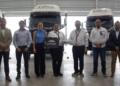
“The operators’ university represents a strategic element within our business strategy. It is the source of human resources to achieve the growth we are experiencing,” described Gilberto Ochoa, general director of Operations at Grupo HG Transportaciones, in an interview with T21.
According to the executive, the university currently has a staff of 80 operators , which allows it to meet the growth needs of its clients, as well as the projects for acquiring new fleets.
One point highlighted by Eric Mijares, manager of HG University, is the institution’s capacity to generate qualified operators with skills and attitudes aligned with the group’s objectives.
“We hire people with a certain profile and after a program of 12 to 14 weeks they are ready to drive a vehicle on a short-course circuit,” Mijares described.
While there are various institutes and training centers, having our own university allows us to offer institutional programs. “We’ve given it greater formality, a stronger structure, a more rigorous learning methodology, and above all, we’ve focused on a very important aspect: precision. In other words, we design maneuvers that help our students develop skill and precision. And we also prioritize road safety , which is crucial,” added Mijares.
Currently, HG University has three campuses : the first at the new facilities of HG Transportaciones in Dulces Nombres, another at Auto Express El Charqueño in Escobedo, and a third at Linda Transportaciones in Apodaca. “These are three centers where we generate, according to the needs of the different business units within the group, the resources to support those needs,” explained Gilberto Ochoa.


The IRU report also identifies that the shortage of operators has effects on various phases of the business; in the case of Mexico, companies report an increase in operational delays , as well as reduced productivity.
One of the areas where Mexico faces complexities, as reported by at least 57% of companies, is the effect of having a less qualified workforce of operators.
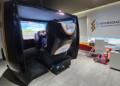
To reverse these elements, the goal of HG University is to combine theoretical and practical training through the implementation of the APEX simulator, which allows maneuvers to be performed in a controlled space, “with blind side maneuvers, visible side, transmission and the accompaniment of a tutor, which in the last stage allows us to familiarize ourselves with the recognition of kilometers, In addition, emphasis is also placed on the type of service we offer to each of the clients adding their location,” described Mijares.
Once these stages are completed, the operator is assigned productive trips accompanied by a university instructor. Then, in the eighth week, they begin visiting real clients, but still as students. After 12 to 14 weeks, the operators have developed a sense of responsibility.
“The fact that an operator is a university graduate and that we give them the opportunity to work and often to venture into the transportation industry, generates a very strong sense of belonging to the organization,” Gilberto Ochoa stated.
The training model promotes inclusion; today , the Grupo HG operator staff includes 25 women who have graduated from HG University.
Another tangible benefit of this business model is that in the last three years, the accident rate has been reduced by at least 60% for the group’s operations, a result that is aligned with training efforts.
Currently, of the operator staff of approximately 1,200 operators, at least 700 are graduates of the University.
Ongoing training
In addition to the training model for new operators of the HG Transportaciones Group, the HG University focuses its efforts on updating the current staff of collaborators.
“We have a permanent training model for all operators, with three components: operator training, feedback sessions when minor incidents occur, and updates,” Eric Mijares explained.
This last model is the one they applied with the incorporation of the new Freightliner Cascadia 5th Generation units, where in addition to the immersion that Difrenosa makes with its technical training, the training schemes of the University allow deepening the knowledge of the new technologies.
“Having units like the 5th Generation Cascadia allows us to promote the road safety model, by having safer tools, with a certain number of sensors that greatly help in the approach and warn the operator even when he is fatigued, when he is tired, this type of unit also helps us a lot with fuel savings, which is a relevant factor,” Mijares considered.
From Gilberto Ochoa’s perspective, the addition of the Cascadias units allows operators to have high-performance, efficient vehicles . And it is precisely the training model that allows them to understand the additional components of this new vehicle within a joint strategy that we must develop together with Difrenosa to achieve maximum benefit.
Comment and follow us on LinkedIn: @Didier Ramírez Torres / @GrupoT21