QUERÉTARO, QRO.- Hours behind the wheel, days that can be extended, pressure to fulfill the operation and a rest that is not always sufficient are part of an activity in which the wear and tear does not necessarily end when the operator turns off the engine.
Cardiovascular diseases and fatigue are among the main threats to the lives of truck drivers , one from a health perspective and the other from an operational perspective, but with factors that can end up connecting behind the wheel.
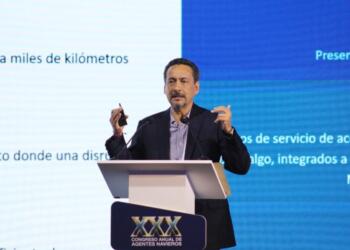
Rodolfo Giacoman, a fatigue management specialist at the Commercial Vehicle Safety Alliance (CVSA) , pointed out that cardiovascular diseases are the leading biological cause of death , while fatigue represents one of the main occupational risks for operators.
During the Tenth National Congress on Road Safety of the National Association of Private Transportation (ANTP) , the specialist detailed that cardiovascular diseases, which include heart attacks and strokes, represent around 224,000 deaths in Mexico, according to data from the 2024 Registered Death Statistics (EDR) of the National Institute of Statistics and Geography (Inegi) , which was published at the end of 2025 by the organization.
Furthermore, he pointed out that the EDR explains that if cardiovascular diseases are grouped with related metabolic diseases, the figure reaches approximately 415,000 out of a total of 819,000 deaths .
The problem takes on a particular dimension for the trucking industry. Giacoman indicated that the life expectancy of North American truck drivers is around 61 years , while a significant proportion of this population is over 45 years old.
“If the average is 61, it means that many people are dying at 50 and others at over 61. That is a problem,” he warned.
On the other hand, there is fatigue, whose role in accidents can be difficult to identify because it does not necessarily leave evidence that allows one to immediately determine that an operator was tired.
Giacoman indicated that investigations by the National Transportation Safety Board (NTSB) of the United States place fatigue in between 30% and 40% of fatal crashes .
But he warned that its consequences can go beyond accident rates.
“It’s not just causing 30 to 40 percent of fatal crashes. It’s making drivers sick,” he said.
The specialist explained that keeping a person tired and working at maximum capacity can increase inflammatory processes and maintain high levels of cortisol and adrenaline, in addition to interacting with problems such as obesity, diabetes and obstructive sleep apnea.
Therefore, he called on companies to review operational decisions that may lead an operator to continue working despite fatigue.
“It could mean that one day, perhaps, they won’t give him the bonus because he won’t take that extra day off and he’s tired, he’s sick, he needs to rest. Change the priorities, change the way you operate,” he argued.
When the first warning may come too late
In cardiovascular matters, prevention also faces a challenge, and the problem can progress without obvious signs.
During his presentation, Giacoman noted that between 33% and 50% of cases may present with sudden death as the first symptom . “There are no symptoms,” he emphasized.
Among the factors he addressed to determine cardiovascular risk were blood pressure, cholesterol, smoking, body mass index, kidney function, family history, and age.
According to Giacoman, addressing these conditions should be part of the safety culture of trucking companies, along with nutrition, exercise, mental health, personal relationships, and proper sleep hygiene.
The approach places two risks under the same discussion: the operator’s safety depends not only on avoiding a road crash, but also on preventing conditions that could deteriorate their health before getting into the vehicle.
In this scenario, the specialist called for the health of operators to no longer be viewed as a separate issue from the operation and to be incorporated into the safety culture of companies, particularly in the face of factors such as fatigue and conditions that increase cardiovascular risk.
Comment and follow us on LinkedIn: @Karina Quintero / @GrupoT21