



In a Mexico where the technical capabilities of officials were valued more than just loyalty, there was room to implement public policies to achieve the development of the country and, above all, to give continuity to various projects.
A representative of this dynamic is Aarón Dychter Poltolarek , who was Undersecretary of Transportation in the then Ministry of Communications and Transportation (SCT, now SICT) not only in two administrations, but with two different political parties in charge of the country: that of Presidents Ernesto Zedillo Ponce de León (1994-2000) and Vicente Fox Quesada (2000-2006) .
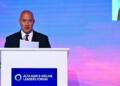
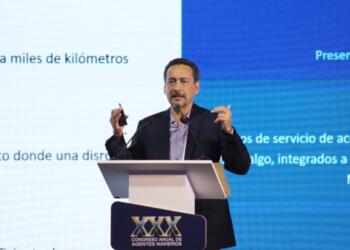
On Saturday, October 24, the death of Aarón Dychter was announced. He was a figure who held the position of Undersecretary of Transportation for 12 years, and he based his position on his technical profile and the implementation of projects that were strategic in the modernization of the national transportation infrastructure.
Among the processes he led, Dychter highlighted the transformation of the Mexican railway system through the concession scheme, a reform that redefined the operation of freight rail transport in the country, making it more productive and a logistical tool for industries located in the country.
Through this process, the concessions of Grupo México Transportes (Ferromex – Ferrosur) , Canadian Pacific Kansas City (CPKC) , Ferrovalle and the Coahuila-Durango Line operate today.
During his tenure, the new national airport model was also consolidated, which strengthened the concessioned airport groups, incorporating private capital into the operation and development of strategic air terminals.
One project that was managed and succeeded in laying the foundations for its consolidation, which today is even used for the connectivity of the Felipe Ángeles International Airport (AIFA), is the suburban railway system for the Metropolitan Area of the Valley of Mexico, through which the current Suburban Train was built that connects Mexico City with municipalities of the State of Mexico.
Managing deregulation
In 1989, the federal government deregulated federal freight transport (it also did so with passenger transport), thereby eliminating concessions and granting free access permits; service rates and service routes were deregulated .
In the 1990s, there was rapid growth in the number of companies and the trucking fleet. Between 1989 and 2000, the number of companies increased by 136%, while the trucking fleet grew by 82% and the trailer fleet by 268%.
It was precisely during this period, starting in 1994, that the General Directorate of Federal Motor Transport , attached to the Undersecretariat of Transport, had to deal with the dynamic growth of this activity.
In response to this process, Dychter Poltolarek stated that it was a process that benefited the country, laying the foundations for greater competition and giving access to micro-entrepreneurs, known as the man-truck driver.
From public to private
Upon leaving public service in 2007, Aarón Dychter founded ADHOC Consultores Asociados , a firm specializing in strategic advice for transportation, energy and infrastructure projects.
His expertise in regulation, financing and concessions allowed him to join various boards of directors of companies linked to the country’s logistics and infrastructure development, including Grupo Aeroportuario del Sureste (Asur) , Grupo Aeroportuario del Centro Norte (OMA) , Grupo Aeroportuario del Pacífico (GAP) , Empresas ICA , IEnova and TRAXION .
Comment and follow us on LinkedIn: @GrupoT21