



The technology to move refrigerated cargo by rail is a reality, but its mass adoption in Mexico still depends on investments, coordination between actors and the construction of infrastructure that guarantees the continuity of the cold chain.
During the panel ” Cold Chain on Rails: Challenges and Opportunities of Refrigerated Containers, ” which took place during Container Week, organized by the Mexican Association of Intermodal Transport (AMTI), Ricardo Bucio, CEO of Hadron Logistics, mentioned that one of the most relevant advances is the incorporation of 53-foot containers equipped with integrated refrigeration and power generation systems.
He mentioned that the cold chain is the most critical element of the entire logistics operation . From the pre-cooling of the merchandise at its origin to its arrival at the final consumer, any interruption can affect the quality of the product and even generate health risks.
“Everything must be very well taken care of so that the merchandise arrives at its destination in optimal condition for consumption,” he explained.
In addition to conventional refrigeration systems, the industry has developed technologies for refrigerated containers, such as those that self-produce nitrogen, which helps to extend the life of some products, such as fruits.
He also mentioned that there are specialized containers capable of operating at temperatures as low as -70 degrees Celsius , known as super freezers . These units were used during the global distribution of COVID-19 vaccines and are now finding applications in highly sensitive products such as certain foods and pharmaceuticals.
He said that refrigerated containers now incorporate more intelligent systems that allow real-time monitoring of location, temperature, equipment operation, fuel consumption, and even potential security incidents.
However, Bucio identified certain challenges for the implementation of these containers , such as the significant investments in equipment, fuel, maintenance, storage and monitoring, as well as adapting railway cars with electrical installations capable of supplying power continuously.
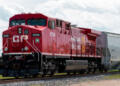
However, he reiterated that the benefits are potential, since a single train can transport the equivalent of dozens of trucks, generating operational efficiencies and reducing road congestion. In the United States, this model already operates routinely on long-distance routes, while in Mexico it is beginning to be explored.
Comment and follow us on LinkedIn: @Evangelina del Toro / @GrupoT21