

Mexico’s industrial landscape continues to evolve. And with it, so does the way spaces for businesses are conceived and developed.
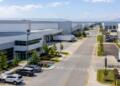
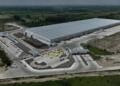
For years, the Build-to-Suit model represented an efficient solution: developing a space tailored to a previously identified user. Today, the market is also exploring a different approach: developing speculative spaces with features that allow them to be adapted to the user’s specific needs as those needs become known.
This evolution has been called Spec-to-Suit .
In Mexico, the concept is already part of the conversation in the industrial market. At Colliers, we use it to describe speculative developments that maintain a flexible initial configuration and allow for the customization of certain elements according to the client’s requirements.
Logic is relevant because it allows us to think about buildings that do not necessarily start from a defined user, but that can respond more quickly to different demand profiles.
And that flexibility can extend beyond the ship.
From real estate to ecosystem
Industrial development increasingly requires considering the environment that makes a company’s operation possible: energy, connectivity, mobility, digital infrastructure, talent, and access to services.
Therefore, discussing Mexico’s new industrial map involves not only observing where land is available, but also what capacity each market has to receive, operate, and support the growth of new investments .
Regional vocations also reflect this evolution.
In markets like Tijuana and Ciudad Juárez , industrial activity is closely linked to manufacturing and electronics. In Baja California and Jalisco, data from the Ministry of Economy show a significant concentration of businesses involved in the manufacture of electronic components .
In Monterrey , the industrial market continues to show dynamism: at the close of the second quarter of 2026, we reported an increase of 107% compared to the same period in 2025.
For their part, Guanajuato, Aguascalientes, and San Luis Potosí function as an integrated industrial ecosystem centered around the automotive industry, concentrating 3.84 million square meters (m²) of projects under construction and in the pipeline, many of them directly linked to Tier 1 and Tier 2 suppliers, as well as complementary manufacturing activities. The presence of global automakers and a highly specialized supply chain has consolidated the Bajío region as one of the most important automotive clusters in North America.
Rather than talking about a single industrial map, these trends point towards greater specialization and differentiation between markets .
And this raises an important question:
Which markets are truly poised to become the next hubs of industrial development?
Available land is not enough
Opening a new industrial park requires much more than just land availability.
Infrastructure is one of the factors that can determine the viability of a development: energy capacity, connectivity, mobility, water, digital infrastructure and access to talent are elements that must be considered from the early stages of planning.
Therefore, industrial development cannot be analyzed solely from the perspective of available square meters.
It must be analyzed from the perspective of the market’s capacity to support the operation of the companies that will enter it .
Energy is gaining importance in industrial decisions
Within this transformation, energy occupies an increasingly important place.
The growth of data centers and artificial intelligence applications is creating new demands on energy infrastructure. The International Energy Agency estimates that electricity consumption by data centers increased by 17% globally during 2025 and projects that consumption could double by 2030.
Furthermore, facilities geared towards high-intensity loads, such as some hyperscale data centers , may require capacities exceeding 100 MW, making energy availability and reliability a relevant consideration for certain projects.
This evolution is taking the conversation beyond traditional supply.
Microgrids, behind-the-meter generation, BESS storage , and solar energy solutions are among the alternatives that can be evaluated to meet specific infrastructure and energy resilience needs.
The question, then, begins to change.
It’s no longer just about how many square meters you can deliver .
It also matters how much energy capacity you can make available to the user.
From the surface to the ecosystem
The future of industrial development will not be determined solely by the size of a building or the availability of land.
The competitiveness of a market will increasingly depend on the combination of factors that allow a company to set up, operate, and grow.
That means thinking about infrastructure before demand arrives ; anticipating user needs and designing assets capable of adapting to different scenarios.
In other words, moving from developing real estate to developing ecosystems .
Mexico has structural advantages to continue participating in North American manufacturing chains, but turning those advantages into successful projects requires evaluating each market from a comprehensive perspective: infrastructure, connectivity, talent, energy, and adaptability.
The value of certainty
An industrial investment is not made with only the present in mind. The nature of these projects demands a long-term perspective and, with it, a careful assessment of risks, infrastructure needs, and the conditions that will allow an asset to maintain its competitiveness.
In a constantly changing environment, the role of those involved in industrial real estate is also evolving.
It’s no longer just about finding an available space.
It’s about understanding the market, anticipating needs, identifying risks, and building alternatives that allow for better decision-making .
Because when the environment changes, certainty gains value.
And in industrial real estate, the real value lies in delivering what is promised and turning uncertainty into informed decisions .
To provide certainty in uncertainty .
*Note: Market figures from Colliers Market Intelligence.
We invite you to read Víctor’s latest contribution: Real estate is not built for a six-year term, but for the coming decades .
*Víctor Gómez Aranzubia is currently an Industrial Strategy Broker at Colliers Mexico .
Comment and follow Victor on LinkedIn .
Comment and follow us on LinkedIn: @GrupoT21