The automotive industry is in a period of transformation , driven by the relocation of production chains, disruptive technologies and the energy transition, which will be crucial to advancing in various aspects that are already redefining the sector, including electromobility .
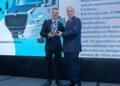
In the panel “Navigating the transformation in the automotive industry”, within the framework of the Mexico’s Nearshoring & Logistics Auto Industry Summit, Diego Ramírez, Director of Government Relations for Latin America at Nissan Motor Corporation , highlighted that there are very important changes in technology, in the electrification of vehicles, although there are other issues that impact the sector, such as the current geopolitical situation , which has generated a new paradigm in the industry.
“The automotive industry is undergoing many changes, coinciding with increased competition. All of this requires companies to make the necessary adjustments and adapt accordingly,” said Ramírez, who indicated that the best approach for each user must be determined regarding electromobility.
“There is a range of 100% plug-in, autonomous and other electromobility options, so we have to find the one that best suits the users,” he explained.
Despite this environment, Carlos Gutiérrez, Director of Government and External Affairs at BMW Group Mexico , considered that the automotive industry is very dynamic and that factors such as the economic, political, technological, and even consumer tastes have changed in different markets, which has forced automakers to innovate.
“The trend towards using more technology in vehicles challenges companies to be more innovative, to have many more tools to create better products,” he stressed, while noting that new market trends and political aspects in various regions of the world “will lead us to a completely different kind of mobility than what we are used to.”
For Gutiérrez, the use of new technologies, of artificial intelligence (AI) in vehicles will give the consumer a different vision of mobility in the future .
The nearshoring phenomenon has become an important factor in attracting investment, relocating manufacturing and component centers closer to target markets.
However, experts warned that this concept is no longer strictly limited to geographical proximity to avoid logistical disruptions like those that occurred during the COVID-19 pandemic, but rather represents a comprehensive industrial integration project where Mexico stands out for its skilled workforce .
They agreed that the main differentiator will no longer be solely the technological capacity of the manufacturing plants, but the talent to operate new tools to continue keeping Mexico at the top of vehicle production.
According to the National Institute of Statistics and Geography (Inegi) , in the period January-June 2026, the production of vehicles in Mexican plants was 1,996,304 light vehicles , and although this figure represented a drop of 0.42% compared to the same period in 2025, Mexico continues to be one of the most important countries in automotive manufacturing.
Meanwhile, 1,689,245 units were exported in the first six months of the year , an increase of 1.4% compared to the same period last year.
The panel made it clear that the future of the automotive industry will be marked by the evolution of the geopolitical environment, the adoption of new technologies and the availability of clean energy, in a sector that is advancing towards electromobility by leaps and bounds.
Comment and follow us on LinkedIn: @Humberto Cruz Moya / @GrupoT21