The freight transport industry requires its managers to have multifactorial capabilities, where the focus should be on the productivity of the companies , but also on finding efficiencies through the incorporation of various tools, such as technology .
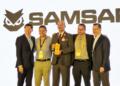
These capabilities were identified by Samsara ‘s “100 Fleet Operators to Watch in 2026” exercise , which recognizes fleet leaders who are transforming their organizations through the strategic use of technology.
In this second edition of the international ranking, six Mexican executives were included. According to Brendali López, Marketing Director of Samsara in Mexico, this growth is not a coincidence , but rather a reflection of an evolution in how Mexican leaders are understanding and using technology within their operations. “It’s not just about adopting technology, but about doing so with a clear vision of profound transformation, breaking paradigms, and demonstrating that disruption can come from any industry , in any country.”
The origin of the paper stems precisely from this logic. Samsara conceived this list as a mechanism to recognize leaders who are using technology as an enabler of structural change, beyond mere operational efficiency .
In the first edition of the list, Mexico was represented by Arturo Pinto , an executive at Flecha Amarilla , in the passenger transport segment. According to Brendali López, this initial recognition paved the way and helped to highlight that things were already being done differently in the Mexican market.
The inclusion of six Mexican leaders now reflects a combination of factors. On the one hand, there is a greater adoption of advanced technological solutions; on the other, a deeper understanding of how these tools can be used to solve each organization’s critical challenges. “It’s the intersection between the optimized use of technology and a very clear business vision ,” López said.

The selection criteria are not focused solely on hard metrics or company size, but rather on the executive’s role as a transformation agent. Samsara assesses how disruptive the leader’s vision is, how they address the main challenges of their operations, and how they leverage technology to turn structural problems into opportunities for change.
Leadership beyond the technological profile
A key element of the list is that not all the recognized executives come from information technology backgrounds. Some have clearly operational, security, or business management profiles. For example, there are leaders focused on security, where the use of technology has reduced incidents, activated preventative protocols, and transformed the organizational culture regarding road and asset security.
“What’s important isn’t where the leader comes from, but rather what their organization’s main challenge is and how they use technology to address it,” the Samsara executive emphasized. This broadens the pool of potential candidates and reinforces the idea that digital transformation in transportation isn’t exclusive to technical departments, but rather a cross-functional responsibility.
From Samsara’s perspective, working with these leaders doesn’t end with their inclusion in the paper . Because they are active clients, the relationship is maintained in an evolving way . Once a priority challenge—such as security, efficiency, visibility, or compliance—is resolved, the conversation shifts to the organization’s next strategic challenge.
This ongoing support has allowed Mexican clients to delve deeper into using the platform. According to Brendali López, after a market adjustment period like the one experienced in 2025, companies have focused more on maximizing the value of the tools they already have , rather than adding solutions without fully utilizing them.
One of the most visible changes has been the increased focus on after-sales services, training, and courses, with the goal of extracting greater operational value. This is complemented by the adoption of new features, such as the AI-powered assistant, which allows users to obtain operational information through natural language, making the platform more intuitive and accessible for different roles within the company.
Ecosystem that is becoming professionalized
The current market context has also contributed to greater maturity in decision-making. According to Samsara, dashboard cameras and basic telemetry tools are now perceived as essential elements of operation, not as disruptive innovations. Differentiation now lies in new functionalities and the ability of suppliers to innovate hand in hand with the customer .
In this sense, the “100 Fleet Operators to Watch in 2026” list acts as a catalyst. By highlighting success stories, it generates a positive ripple effect and motivates other industry leaders to question their own paradigms. “It becomes a virtuous cycle in which colleagues look at what others are doing and say: we can also be more disruptive,” López noted.
Furthermore, the growing presence of Mexican leaders in a global ranking helps strengthen the country’s reputation in logistics and transportation operations, placing them at the same level as executives from the United States or the United Kingdom.
Although Samsara doesn’t set numerical goals for how many Mexican leaders should appear in future editions, the expectation is clear: to continue driving these kinds of transformations . The list will continue to be published annually, and the work with clients—winners or not—will continue to focus on understanding their business challenges and supporting them in overcoming them.
“We are very proud of these six Mexican leaders who continue to break paradigms,” concluded Brendali López. Beyond the recognition, their participation in this paper confirms that digital transformation in Mexican transportation is no longer just aspirational rhetoric, but a reality that is beginning to resonate globally.
Comment and follow us on LinkedIn: @Didier Ramírez Torres / @GrupoT21