The arrival of new equipment at the Port of Veracruz comes at a time when pressure for operational efficiency and emissions reduction is beginning to redefine investments in port infrastructure. In this context, Hutchison Ports ICAVE announced a capital injection of more than 540 million pesos (US$30 million) , aimed at strengthening its technological capabilities and advancing its environmental agenda.
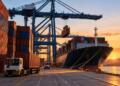
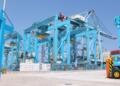
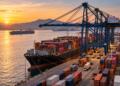
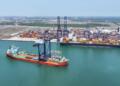
The investment has resulted in the addition of a Super Post Panamax gantry crane and five electric RTG cranes , all manufactured by ZPMC . With these new cranes, the terminal aims to address both the increasing size of vessels and the need to optimize operational flows in the yard and at the dock. The new dockside crane, with a reach of up to 24 rows of containers, is designed to handle the large-scale vessels that dominate international shipping routes—a factor that is no longer merely aspirational, but a reality in the world’s major ports.


These types of improvements not only aim to increase capacity but also to reduce operational friction . Precise maneuvering, advanced control, and the ability to handle larger vessels position the terminal more competitively in an environment where loading and unloading times are increasingly critical for logistics chains.
In parallel, the incorporation of electric RTG cranes introduces a component that is beginning to gain traction in the port debate: the energy transition . “These 100% electric units stand out for their energy efficiency and innovative emissions reduction systems, which not only optimize operating times but also contribute to a significant decrease in the carbon footprint of the terminal’s daily activities,” stated Javier Rodríguez Miranda, General Manager of Hutchison Ports ICAVE, in a press release.
The emphasis on electrical equipment is not isolated. According to the executive, this investment aligns with Hutchison Ports’ global Net Zero strategy , which aims for a 54.6% reduction in absolute greenhouse gas emissions (scopes 1 and 2) by 2033, as well as the goal of achieving net-zero emissions across its entire value chain by 2050. In other words, technological modernization is becoming closely linked to measurable environmental commitments, moving beyond mere rhetoric.
At the operational level, the terminal anticipates improvements in its handling capacity and vessel turnaround times, critical variables in a port like Veracruz, where the demand for port services coexists with the need to avoid bottlenecks. The addition of this equipment is part of a broader infrastructure upgrade process, which includes the adoption of electric and, gradually, automated solutions.
However, the underlying issue goes beyond a simple fleet expansion. The investment in state-of-the-art equipment reflects a broader trend in the industry: ports are no longer just competing on volume, but also on efficiency, sustainability, and the ability to adapt to an increasingly demanding maritime trade.
With this investment, Hutchison Ports ICAVE reinforces its position within the national port system, at a time when modernization is no longer a competitive advantage but a necessary condition to sustain operations in the long term.
This terminal upgrade comes at a time when ICAVE has handled 164,553 twenty-foot equivalent units (TEUs) in the first two months of this year, 8.4% more than the same period last year, according to information from the port authority.
Comment and follow us on LinkedIn: @GrupoT21