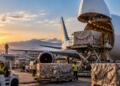
Copa Airlines considered that the Cancun International Airport, belonging to the Southeast Airport Group (Asur), could be a “good transit point” for the movement of cargo to Europe; however, the customs system delays the handling of merchandise.
Jaime Álvarez, Senior Cargo Director of the airline, commented that as a result of this situation they have stopped using this Mexican airport, diverting this operation through the Dominican Republic, where they handle up to 40 tons per week.
“The location is cheaper than Mexico, and the biggest problem is time. They want to hold the cargo and inspect it, doing things that have no value, and that’s why it takes longer, and that doesn’t help us. Air cargo should move quickly and without additional costs; paying more doesn’t make sense,” he stated.
In an interview following his participation in Cargo Facts Latam, he reiterated that the key factor in air cargo is speed and competitiveness; otherwise, there is maritime transport.
He explained that Cancun has a high volume of passenger flights, so there is a large availability for cargo transport through its cargo holds, but the customs system is not an option.
In this regard, he commented that they have met with Mexican authorities on several occasions, however, there has been no progress on the issue.
“Cancun is a place where Mexico has a lot of opportunity and they haven’t solved it,” he said.
Copa Airlines currently operates two cargo flights to Felipe Ángeles International Airport (AIFA) , in addition to passenger flights to Cancún, Guadalajara, Los Cabos, Monterrey and Mexico City International Airport (AICM)
Regarding their operations at AIFA, he noted that “there are no opportunities, since it is the only airport that allows us to operate cargo flights; it is a good airport and we are functioning well. There are always possibilities (to increase operations), but we just implemented an increase, and after it is consolidated, we will see if there is a need for more.”
Luis Alejandro Ortiz, Cargo Manager, commented that cargo operations at Felipe Ángeles Airport are not saturated and allow the use of slots (takeoff and landing times), however, they want to improve customs, staff rotation, among other things.
However, he noted that Copa Airlines handles more cargo through Mexico City International Airport (AICM) due to the large number of passenger flights it operates to that airport. It runs six daily flights, although the cargo is different.
On another topic, Jaime Álvarez mentioned that the airline is making investments in the Panama International Airport for cargo handling, including increasing the cargo reception and dispatch areas, given the increase in merchandise handling they have registered.
“Panama has the advantage of having space; it’s not compromised. It continues to grow very rapidly and will continue to do so; the cargo sector is also experiencing very healthy growth. The country is an ideal location for cargo; it’s in the heart of the Americas,” he explained.
He ruled out adding more cargo planes to the company this year; they currently operate two, although they have 130 passenger aircraft that can carry up to three tons.
Álvarez explained that the airline avoided the impact of US tariffs because its operations are primarily in Latin America and the Caribbean.
“There’s a tendency to avoid the United States when cargo comes from Asia or Europe, and we handle a lot of merchandise from these countries. We operate a large volume in the Caribbean, where we get cheaper space, more frequent service, good product and service, and we make this a good transit point for Europe,” he said.
Comment and follow us on LinkedIn: @Evangelina del Toro / @GrupoT21