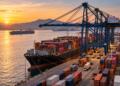
The story of Grupo TAP is not built on a narrative of accelerated expansion or opportunistic logic . Rather, it is the result of a long-term analysis of the Mexican logistics system, the accumulation of operational experience, and a business conviction that understands that growth doesn’t always mean moving quickly, but rather moving steadily. Its origins date back to the port privatization three decades ago, which paved the way for TAP Terminal in the port of Manzanillo as a facility designed for handling agricultural bulk cargo. “The terminal was mostly designed to house a grain terminal, with a structure that at the time was state-of-the-art,” recalls Gabriel Rivera, CEO of TAP Terminal, in an interview with T21.
That infrastructure, designed for a single segment, ended up being the foundation of a diversification process that shaped the group’s direction. Over time, TAP understood that the port demanded more than specialization: it demanded flexibility, agility, and operations aligned with the real needs of the industrial supply chains . Thus began its foray into general cargo, a segment that for years had been treated as residual in Manzanillo. “General cargo was left as the last operation that generated revenue,” says Rivera, highlighting a historical oversight that directly impacted strategic industries such as automotive.
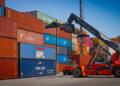
The strategy was clear from the outset: to release cargo as quickly as possible and prevent the port from becoming a storage facility . “We understand that cargo isn’t for storage; the port is a transit point,” he insists. This philosophy led to a direct operating model that, while complying with all customs regulations, reduced both time and costs. The numbers support this logic: in 2025, 775,000 tons of general cargo were handled, with 60% released directly, confirming a solid operating year for TAP Terminal.
THE BREAKING POINT
However, this growth was not without its crises. The year 2024 marked the organization’s biggest challenge when regulatory interpretations completely halted general cargo operations for months at TAP Terminal. “In September, we moved zero tons, not a single ship,” recalls Rivera. The corporate decision was to retain staff, absorb the financial impact, and defend the process technically. The outcome revealed an uncomfortable truth: port congestion was not an isolated problem. Nine anchored general cargo ships raised alarm bells . “An anchored ship costs thousands of dollars,” Rivera points out, making it clear that the cost of inefficiency ultimately affects the entire supply chain.