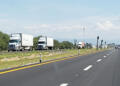
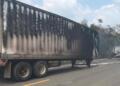
The freight transport sector in Mexico faces a critical juncture marked by high accident rates and cargo theft . This situation not only threatens the integrity of the supply chain but also endangers human life.
According to Raymundo Mancera Sandoval, president of the Mexican Association of Private Security and Satellite Industry Companies (AMESIS) , accidents are the result of a combination of factors, where the human element is crucial. The main causes range from the absence of prior risk analysis for each route to the lack of adequate training for operators , who sometimes lack basic skills due to the high demand in the sector.
One factor exacerbating the situation is the informality within the satellite tracking services sector . Several trucking companies, in their efforts to reduce costs, hire uncertified or informal monitoring providers , which poses a risk to their operations.
“Companies are trying to save costs by hiring informal tracking services, but this only makes the problem worse,” Mancera warned in an interview with T21, alluding to deficient response protocols in the security chain.
The informal nature of these companies also impacts cargo security , as informal tracking companies are a potential source of leaks of sensitive information about routes and goods, and even operator data. This situation “generates impacts on cargo and a loss of credibility for formal firms,” the specialist noted.
To minimize the risks this represents, AMESIS promotes a security vision that integrates intelligence, logistics, preventive monitoring and inter-institutional coordination , seeking to ensure continuous cargo traceability.

Insecurity trends in critical corridors
The security trends show an increase in events with greater violence and the expansion of risk corridors, particularly in the Puebla-Veracruz and Guanajuato-Querétaro sections, where highway incidents have increased, and others have decreased.
“On the contrary, the number of incidents has been decreasing in the State of Mexico, where some important strategies are being implemented to reduce robberies, but the Puebla-Veracruz and Mexico-Puebla sections are extremely high, and the Guanajuato-Querétaro section is already experiencing a very high incidence,” Mancera pointed out.
In that regard, he said that satellite technology plays a crucial role, not only in recovery but also in crime prevention , as it allows for proactive measures, and in the case of incidents, “you can anticipate them a little.” “There are already some companies working with very advanced systems, even integrating artificial intelligence and predictive alerts that allow them to anticipate an event before it happens,” he added.
According to Overhaul , freight carriers felt the brunt of organized crime groups in Puebla, Mexico State, Guanajuato, Michoacán and Veracruz, which together account for 80% of the incidents.
At AMESIS, the creation of intelligent monitoring centers with high-availability infrastructure and direct connection to the authorities is being promoted to handle emergencies, where reactions can be guaranteed in the shortest time, even in minutes, “and have total traceability of the event, that helps the authority a lot so that they can also carry out their prevention and recovery strategies, and in that synergy, minimize impacts.”
These practices have allowed the organization to have a high recovery rate when an accident occurs and is reported immediately; however, there are also some challenges.
“The recovery rate we have at AMESIS is above 90%-95% when the report is made within the first 30 minutes of the event beginning, that is, when the robbery starts; the percentage is very high. When this time frame is exceeded and more than an hour or two has passed, the recovery rate drops dramatically to less than 50%,” he pointed out.
Coordination with the authorities has been vital in addressing accidents in the freight transport sector. The National Guard is one of the institutions with which AMESIS maintains close ties.
“They give us support at practically a national level, because they have influence on all the highways, and working particularly with the State of Mexico, with whom we have a very good relationship with the General Directorate of Cargo Theft, and above all looking at how we are closing links with cargo theft in Querétaro, Puebla, and Pachuca, which are the borders of Mexico City, and it is through here that 80% of the cargo that goes out passes,” Mancera indicated.
Cyberattacks: New Frontiers of the Threat
In addition to traditional theft, there are technological threats such as cyberattacks , which aim to steal sensitive information related to the merchandise being transported and the routes, making it a growing threat in road transport.
To combat cybercrime, data encryption , redundancy in communication channels, and the use of secure cloud backups are vital , said Raymundo Mancera.
Trucking operators are also exposed to crimes involving jammers , devices that inhibit the signal of satellite tracking systems.
According to Overhaul data, it is estimated that between 80% and 85% of cargo thefts in Mexico involve the use of jammers . The firm also revealed that from January to July 2025, the use of these devices was concentrated in the central region (66%) and the Bajío region (27%). For Mancera, part of the solution regarding these signal blockers is for authorities to stop allowing their importation into the country, as well as their use.
To ensure safety, AMESIS, which has 32 affiliated companies, recommended that carriers require their suppliers to have certifications such as ISO 27001. Mancera emphasized the importance of transportation validation tools with the National Guard, linked to the LAICA platform (Immediate Alert Line Against Assaults) , which ensure that vehicles have the necessary safety measures in place.
According to the specialist, an effective security strategy is based on three pillars:
- Prevention: Route evaluation, operator selection, continuous monitoring.
- Response: Clear emergency protocols, direct communication with authorities, 24/7 monitoring centers.
- Technology: Certified devices, redundant connectivity, and predictive analytics.
The specialist also emphasized that the Single Point of Contact (PUC) has been developed , which is a tool that concentrates emergency information from associated companies to channel it to the corresponding authority.
The fight against accidents, insecurity, and the informality of tracking companies demands prevention, response, and certified technology. As Mancera concludes, AMESIS not only advises and trains, but also fosters a measurable safety culture for the trucking industry.
Comment and follow us on X: @Eliseosfield / @GrupoT21