With a weight that represents almost half of the national exports , the northeast of Mexico, which includes the states of Tamaulipas, Coahuila, Nuevo León, Durango and Chihuahua, has become a key driver of shipments abroad, however, the challenges of infrastructure, security and regulation limit its potential, warned Luis Javier Cendejas Meneses , president of the Mexican Council of Foreign Trade of the Northeast (Comce Noreste) .
“Today, the region is strategic because it accounts for 45% of the country’s exports, but we continue to face bottlenecks that don’t match the level of competitiveness demanded by the markets,” he said in an interview with T21.
For the business leader, the international situation is marked by a climate of uncertainty . The upcoming revision of the United States-Mexico-Canada Agreement (USMCA) aims to become a renegotiation , in a global environment where tariffs and geopolitical tensions, led by the United States, are resurfacing.
“Thirty-nine million jobs directly depend on this agreement. Mexico needs technical negotiators with proven experience, because we can’t leave room for whims,” he stressed.
The president of Comce Noreste was emphatic in stating that “ Mexico doesn’t need more factories, it needs world-class logistics ,” as well as modernizing customs.
“In Singapore, a container crosses in 15 minutes; in Mexico, at ports like Manzanillo, it can take up to 15 days,” he explained.
Although Texas has invested billions of dollars in infrastructure on the border with Nuevo Laredo , expanding its roads, the Mexican side has maintained unexpanded infrastructure for three decades.
“The asymmetry is evident. Without efficient logistics, export potential is slowed,” he warned.
In addition to logistical challenges, road safety and the vulnerability of supply chains to suppliers linked to illicit activities represent a growing risk.
“It’s a very fine line: if a company buys from a supplier linked to organized crime, the entire chain can be compromised. We need clear rules, traceability, and anticipation, not improvisation,” he emphasized.
In this regard, Cendejas outlined three priorities for foreign trade , the pillars that will guide his administration at the Northeast Council.
The first of these is representation and lobbying to voice the needs of exporters before agencies and authorities.
On the other hand, training to prepare companies on critical topics such as certificates of origin, value-added rules, and regulatory compliance.
And finally, quality networking to boost business collaboration based on statistics, hard data, and best practices.
Javier Cendejas also called for a shift from reaction to prevention , with advance plans for tariffs, disruptions, and operational risks.
“We can’t rely on improvisation. Companies are already showing how to plan for scenarios A, B, and C. Mexico needs that long-term vision,” he noted.
Mexico’s northeastern region is moving toward a strategic modernization of its logistics infrastructure . Cendejas highlighted that in Nuevo León, Colombia’s customs office has received significant investment, while the 41-kilometer highway connecting the border, considered a “rough diamond,” is being polished to ensure a more efficient flow of goods.
He also stated that multimodal service is becoming established as an option to complement road transport.
“The use of trains and the construction of new bridges seek to alleviate pressure on current land transportation capacity, optimizing time and costs for exporters and importers,” said Cendejas.
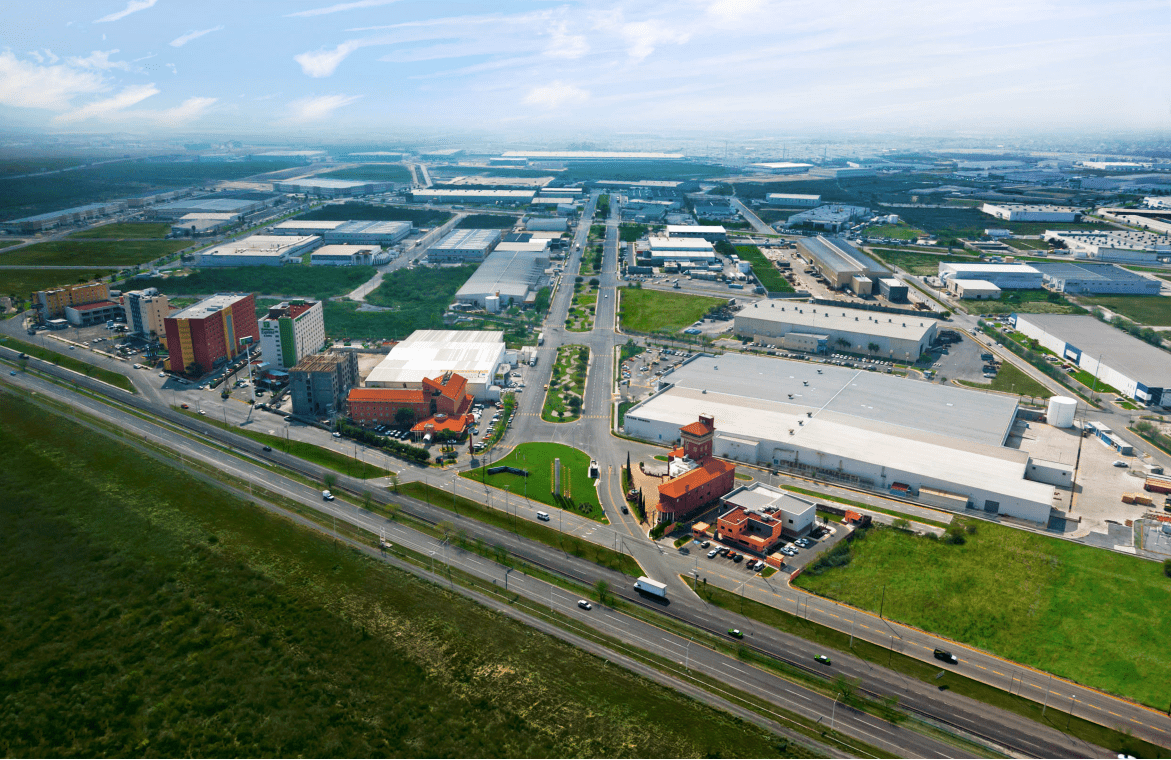
A key element in these expectations is the development of inland customs , especially that of Monterrey, located at the Interport.
This bonded facility will allow the dispatch of strategic cargo from ports through controlled customs regimes, a recent system that, according to Cendejas, is still underutilized due to the authorities’ caution and bureaucracy.
“The correct implementation of this regime could maximize the efficiency of the regional logistics chain,” he said.
On the other hand, air and land connectivity has recently been strengthened with events such as the Jalisco-Nuevo León axis meeting, which promoted technological and industrial exchange between the two states.
The investment generated by these initiatives, along with the promotion of major projects linked to global events such as the 2026 World Cup, promises to directly benefit foreign trade, streamlining export and import processes without affecting competitiveness and security.
Comment and follow us on X: @jenna_GH_ / @GrupoT21