The 2026 FIFA World Cup, the review of the United States-Mexico-Canada Agreement (USMCA) , and the midterm elections in the United States next November could pose risks to supply chains, primarily for the food, pharmaceutical, automotive, and electronics industries.
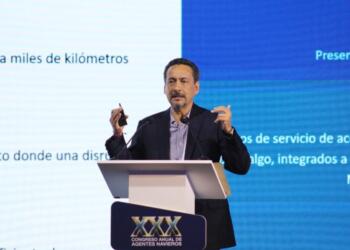
Jorge Luis Chávez Zárate, founding partner of the International Federation of Authorised Economic Operators (IFAEO) , explained that prevention is a crucial point to face the challenges that may arise during such events.
“The risks associated with the World Cup include impacts on critical infrastructure, cyberattacks, disruptions on highways, and issues at border crossings like Laredo, Matamoros, Tijuana, and Ciudad Juárez. We need to focus on ports and airports. What will happen on highways like the Mexico-Laredo highway, and what about the increase in visitors? There will be five million, and we need to take that into account so that our supply chains don’t get disrupted,” he explained.
In an interview, he specified that work must be done on how to improve the existing infrastructure and anticipate certain events such as a road blockade to avoid impacts, a strike, or food contamination.
Similarly, he considered that communication between companies and government “is crucial” and said, “We created the “Supply Chain Intelligence and Security Committee (CISCS)” in San Luis Potosí as a pilot program where we are linking various trade associations through their organizations, such as the Mexican Association of Freight Forwarders (Amacarga ), the automotive industry clusters of SLP, the UUZI industrial zone users’ union, and we are inviting customs, military, Navy, and National Guard authorities so that, through risk analysis, we can anticipate situations.”
“There are already committees and links with the authorities, and these need to be strengthened in the face of events like the 2026 World Cup or elections. How are we going to strengthen them? With a strategy from a specific committee to mitigate supply chain risks. We are connecting with different chambers of commerce and associations so that, through these partnerships, we can share data and work together using the same language, which in this case is the Authorized Economic Operator and CTPAT,” he stated.
In that regard, he assured that IFAEO, together with the automotive industry cluster of San Luis Potosí, wants to carry out prevention initiatives and an emergency response channel for critical events with various organizations and agencies, including customs, economy, the Tax Administration Service (SAT) and the Ministry of Defense (Sedena) , National Guard and Navy (Semar).
“This is an initiative we are promoting because of the World Cup and all the dynamics that will come in the next 18 months, which is a cocktail for supply chains, but it is an initiative that will be open and permanent, where the Intelligence Committee will do the tests at the World Cup with some organizations like Amacarga, there will be five of us promoting it with the authorities,” said Chávez Zárate.
He explained that the Intelligence Committee should focus on training companies and authorities of the Authorized Economic Operator and CTPAT to understand their operations in ports and airports, as well as collaboration in preventing risk situations and establishing a channel for better communication to react to problems.
Comment and follow us on LinkedIn: @Evangelina del Toro / @GrupoT21