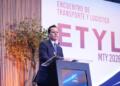
In an interview with T21, he indicated that the company, dedicated to the marketing and distribution of fuels, participated in working groups, which resulted in the recent Registration Program of the National Energy Commission (CNE) , with organizations of the transport sector, such as the National Chamber of Freight Transport (Canacar) , the National Association of Private Transport (ANTP) and the National Chamber of Passenger and Tourism Transport (Canapat) , in light of the new regulation for the activity of dispatch for self-consumption of fuels.
This regulation represents an opportunity to provide greater legal certainty to self-consumption , although it also implies new responsibilities, such as increased monitoring, for those who have this type of installation, as well as for the distributors and marketers who supply them with fuel.
“ The program opens a window of transition towards the regulation of self-consumption of petroleum products . The challenge for companies will be to demonstrate not only where and how they operate, but also the traceability of the fuel, the volumes consumed, and the final destination of the product,” he stated.

Support in the face of regulatory change
With over 41 years in the market, Energéticos Fusión primarily engages in the wholesale and semi-wholesale distribution of diesel, gasoline, and urea. The company operates as an authorized distributor for Petróleos Mexicanos (Pemex) and has its own storage and land transportation infrastructure to serve both service stations and end users.
The firm has a presence in the State of Mexico, Tabasco, and Querétaro, and is part of Grupo PERC . In this context, Energéticos Fusión has incorporated regulatory compliance as part of its relationship with clients, particularly in light of the new regulations for self-consumption. Carlos Quintana explained that the support includes guidance on the regularization processes and the documentation that companies will need to submit.
The scale of the process is one of the main factors that concern the sector. According to information presented by Quintana, there are more than 14,200 facilities related to self-consumption distribution activities in the country.

According to the executive, a widespread disruption of supply at these facilities would have effects on sectors such as transport and logistics , so he considered it necessary to maintain a transition that allows companies to adapt to the new framework without compromising their operations.
On August 11, the CNE published in the Official Gazette of the Federation the Agreement establishing the Registration Program for Persons who have facilities where the activity of dispatch for self-consumption of petroleum products is carried out .
The program seeks to identify existing facilities and generate information that will strengthen the traceability of operations, in the context of the entry into force of the Hydrocarbons Sector Law and its Regulations.
According to the program, the registration period to regularize this activity will conclude on December 31, 2026. The measure aims to integrate the information of those who carry out deliveries for self-consumption and advance their regularization without interrupting the activities of sectors considered strategic for the economy.
The program states that self-consumption does not authorize the sale of fuel to third parties . Petroleum products also cannot be given away, transferred, or supplied to other people.
It also includes an exclusion for business and/or coordinated groups , that is, companies that are supplied by the same utilization facility.
The next step: permissions
For Quintana, registration is only the first step. Once the established period has ended, the CNE will have a maximum of 12 months to issue the regulations for granting Dispatch Permits for Self-Consumption.
Subsequently, those who have registered must submit the corresponding application and obtain the permit in accordance with the requirements and deadlines established by the new regulation.
This process also modifies the role of distributors and retailers. According to Energéticos Fusión, these companies will have to strengthen their review processes and verify that their customers’ facilities comply with applicable records and regulations before carrying out certain supply operations.
Carlos Quintana believes the fuel market can move toward a more orderly scenario as new regulations are implemented. He particularly emphasized the importance of the authorities maintaining a transition process that allows companies to adapt without disrupting their operations.
Comment and follow us on LinkedIn: @Humberto Cruz Moya / @GrupoT21