Women’s participation in technical areas of the trucking industry is gaining ground with the launch of ” Techniques of the Future ,” a program promoted by Scania Mexico and the German Technical Cooperation (GIZ) that seeks to train specialized female talent for the heavy transport industry, the companies reported through a press release.
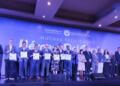
The initiative is part of the “ Women Driving Change ” project and started with a first generation made up of nine women who will begin their automotive technical training at the CEDVA Group Educational Center.
The program includes six months of training: two months of theoretical and practical training and four months of professional internships accompanied by Scania specialists .
The goal is to increase female representation in technical and specialized positions within an industry facing transformations related to electromobility, digitalization, and the decarbonization of transport.
The project has technical and financial support from the develoPPP program, promoted by the German Federal Ministry for Economic Cooperation and Development (BMZ), in addition to the participation of Pro Sociedad and Grupo CEDVA.
Johanna Wysluch, director of the Cities and Transport project at GIZ, pointed out that the future of transport will depend on the sector’s ability to attract and develop diverse talent, and therefore considered that specialized training for women contributes to reducing participation gaps in an activity historically dominated by men.
The curriculum includes 32 training modules . Of these, seven focus on technical knowledge related to automotive mechanics, and 25 are part of a career development plan. In addition, participants will receive introductory training in electromobility and 10 courses focused on social-emotional skills.
Alejandro Mondragón, president and CEO of Scania Mexico, highlighted that the technological evolution of transportation demands increasingly specialized profiles, particularly given the advancement of electric vehicles, diagnostic systems and solutions geared towards sustainability.
Once the training is completed, the participants will have a career plan and will be linked with job opportunities within companies in the transport sector, with the support of Scania and the organizations involved in the project.
The initiative adds to the efforts that various companies and organizations have promoted in recent years to increase female participation in an industry where the presence of women continues to be a minority, particularly in operational and technical areas.
Comment and follow us on LinkedIn: @Karina Quintero / @GrupoT21