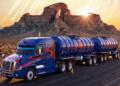
The situation regarding road accidents in the motor transport sector shows a steady increase in incidents: in 2025 they increased by 8.5% and this trend continues in the first quarter of 2026. Road insecurity represents a cost equivalent to 1.8% of the Gross Domestic Product (GDP) and beyond economic terms, it translates into 1.2 deaths for every 10 accidents .
To understand the complexity of road safety, one of the commonalities is that it is a multifactorial problem that has various aspects from which it must be addressed and, therefore, is not the responsibility of one area, but of organizations and their ecosystems .
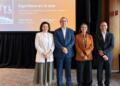
In light of the above, the panel: “The challenge of changing road safety in Mexico” , held within the framework of the 5th edition of the Safety Summit of Jugos Del Valle-Santa Clara (JDV-SC) , presented various visions from the organization, but also with its strategic partners.
A first starting point is that security should be seen as an investment, not as a cost, a philosophy shared by Juan Carlos Jaramillo, CEO of JDV-SC.
Along the same lines, Alfredo Fernández, Chief Financial Officer (CFO) of JDV-SC, emphasized the benefits of investing in security, which contribute to reducing hidden costs such as accidents, turnover, litigation , and even an element that should not be overlooked: reputation.
“A peso saved is worth the same as a peso sold, but safety protects both,” Fernández summarized.
Alejandra Suárez, Transportation Director at Coca-Cola FEMSA, described road safety culture as a long-term process. “Road safety culture must be sustainable; it’s a process that takes years, not an immediate solution.”
Suárez also spoke about the challenge that operators face and that they should be recognized for their work, in all the areas where they must perform safely.
Therefore, in addition to technology, they require precise and focused training to take advantage of all available technological knowledge and tools, which implies creating good instructors .
When discussing how safety is a multifactorial issue, it was indicated that solutions are required from various fronts. For this reason, José Quesada, Global Route to Market Safety Manager at The Coca-Cola Company , described how investment in technology must be aligned with monitoring compliance with processes and the devices acquired, in order to achieve the expected results.

At that point, Quesada emphasized that attention must be paid to the interaction of the methods applied with the operators, where corrections can be made based on feedback received in an effort to improve the processes.
Christian Guadiana, Director of Transportation at Solistica, emphasized that the industry must move from simply having safety initiatives to a shared road safety culture, one that is appropriate to the nature of the problem. “We have learned from the Coca-Cola system that investing in safety is a way to be competitive . ”
Alfonso Vázquez, Logistics and Distribution Director at JDV-SC, sent a message to all members of his team and their transportation partners, aiming to implement changes starting today, during which various elements for development were discussed. “Let’s make things happen and ensure they align with our teams.”
Vázquez asserted that, while there are operational pressures, all areas must take responsibility and be consistent with the safety approach to achieve change.
Comment and follow us on LinkedIn: @Didier Ramírez Torres / @GrupoT21