The airport groups of the Central North (OMA) and the Pacific (GAP) declared themselves ready to receive thousands of national and international visitors ahead of the start of the 2026 FIFA World Cup.
According to OMA, while the construction of new infrastructure continues to advance, Monterrey Airport maintains continuous operation, serving approximately 16 million passengers annually and more than 130,000 air operations per year; in addition, it has strengthened its capabilities for a more efficient, safe, and agile operation for travelers.
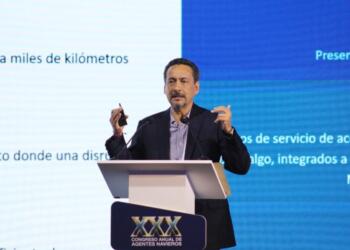
“We are building the airport of the future without halting the airport of the present. We know that the construction may represent temporary adjustments for our users, but it is also the visible sign of a profound transformation that is already generating concrete benefits for those who travel through Monterrey,” said Ricardo Dueñas, CEO of Grupo OMA.
As part of this transformation, the airport is already operating with new technological tools that streamline passenger transit and strengthen security standards, such as self-service kiosks that multiply the positions for checking luggage in a couple of minutes.
Automatic doors that, through the QR code of the boarding pass, expedite access to the security checkpoints , biometric reading of passports in international arrivals and in collaboration with the National Institute of Migration (INM) , verify identity in real time and accept electronic passports from 30 countries.

In addition to a state-of-the-art Operational Control Center that concentrates technology, equipment and processes to monitor flights, aircraft, vehicles and passenger flow in real time, and allows for coordinated rapid responses to any contingency.
Meanwhile, HI-SCAN 6040 CTiX equipment with three-dimensional Computed Tomography (CT) technology, one of the most advanced airport screening solutions internationally , is now operational . This means passengers no longer need to remove laptops, liquids, gels, or electronic devices from their luggage during screening, speeding up the security checkpoints and improving the travel experience. This technology is already in place at the Terminal A screening checkpoint and will soon be implemented at Terminal C.
These works represent an investment of eight billion pesos (mdp) destined for the Monterrey International Airport between 2025 and 2030, as part of a multi-year program of more than 16 billion pesos for the entire OMA network.
In preparation for the World Cup tournament, the airport will enhance its signage and provide information kiosks to guide national and international visitors, in addition to the ongoing work of its Passenger Experience Committee on key operational processes.
“We continue to transform the travel experience in Monterrey with industry-leading infrastructure and technology. The World Cup is an important milestone, but this investment is designed for sustained growth in the coming years. Together with passengers, authorities, and partners, we are building the airport of the future: bigger, more comfortable, safer, and better connected,” Dueñas emphasized.
Meanwhile, GAP reported that Guadalajara International Airport is shaping up to be one of the main entry points for fans, delegations, and tourists arriving in the country during the World Cup, where the city will host four matches and a cultural and tourist agenda that will expand the flow of national and international travelers.
“This major football event represents a unique opportunity to showcase the operational capacity and long-term vision with which we have developed Guadalajara’s airport infrastructure. The investments made in recent years allow us to meet record demand and continue supporting the region’s economic and tourism growth,” stated Cryshtian Amador Lizardi, administrator of the Guadalajara Airport.
The upgrade of this airport terminal was part of the 2020-2024 Master Development Plan, in which GAP allocated more than 15 billion pesos for the airport’s modernization and expansion . Among the most significant projects are the construction of a second runway, 3,538 meters long; the expansion of the hangars to 45 positions; the renovation of 26,000 square meters of the terminal building; and the doubling of parking capacity.
These investments are complemented by operational measures implemented in the context of the world’s most important sporting event in football. Since June, vehicular access has been expanded to three lanes, a project designed to expedite entry times to the terminal and optimize traffic flow in one of the corridors with the highest passenger volume.
Meanwhile, the Jalisco government inaugurated Line 5 of the Mi Macro Airport system , one of the most significant mobility projects developed for this major football event. The electric transport system will connect the airport terminal with various strategic points in the Guadalajara Metropolitan Area via three main routes, strengthening urban connectivity for visitors and residents.
Ahead of the opening ceremony, the national teams from South Korea, the Czech Republic, and Colombia arrived on charter flights and were processed under a special protocol that included immigration and customs controls on the tarmac, on-site baggage inspection with X-ray equipment, specialized handling of sports equipment, and enhanced security with canine units. Specialized airport personnel were also deployed to ensure efficient, safe, and coordinated processes during the teams’ arrival and transit within the airport facilities.

“With a renovated terminal, new access points, greater operational capacity and a strengthened mobility network, GAP arrives at this international football event with an infrastructure prepared to meet a historic demand and support the long-term development of the region,” it was emphasized.
Comment and follow us on LinkedIn: @GrupoT21