The reconfiguration of global trade has favored Mexico as an investment destination, but the growing dependence on the US market and the advance of Asia as a strategic supplier pose new challenges to the competitiveness and resilience of supply chains .
Given this scenario, companies are modifying their strategies to reduce risks and ensure operational continuity in an environment marked by geopolitical tensions, changes in trade policies, and economic uncertainty stemming from US tariffs.
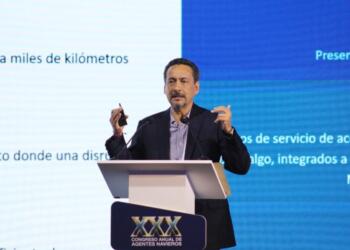
This was pointed out by Carlos Kuriyama, director of the Policy Support Unit of the APEC Secretariat ( Asia-Pacific Economic Cooperation Forum ), who explained that, since the mid-2010s, a process of productive reconfiguration began that has led companies to diversify their operations and seek new locations for manufacturing and investment.
According to the expert, Southeast Asia and Mexico have been the main beneficiaries. Countries such as Vietnam, Malaysia, Indonesia, Singapore, and Thailand, among others, have captured a significant portion of the investment flows seeking alternatives to China; while Mexico has strengthened its position thanks to its proximity to the United States.
This trend is reflected in investment flows. By the end of 2025, Mexico had received $40.871 billion in Foreign Direct Investment (FDI) , representing a 10.8% increase compared to the FDI received in 2024, primarily in manufacturing, thus consolidating its position as one of the leading recipients of productive capital among developing economies.
However, Kuriyama cautioned that the international context is changing again. The uncertainty stemming from new trade policies and tariff measures could pose challenges for economies highly integrated into a single market.
In that regard, he emphasized that one of Mexico’s main challenges will be to diversify its trade relations . Currently, more than 80% of Mexican exports go to the United States, a concentration that exposes the country to risks stemming from regulatory or trade changes in its main economic partner.
In March 2026 alone, the value of trade between Mexico and the United States reached $83,978.6 million, an 8.6% increase compared to March 2025.
According to Kuriyama, while exports continue to depend on North America, imports show a different dynamic. The specialist believes that Mexico has increased its purchases of components, supplies, and technology from Asia, driven by the competitiveness of suppliers in that region in terms of cost, quality, and availability.
This situation poses an additional challenge for companies based in the country: maintaining compliance with the rules of origin established in the United States-Mexico-Canada Agreement (USMCA) to retain preferential access to the U.S. market, without giving up the competitive advantages offered by sourcing from Asia.
In an interview with T21, Kuriyama emphasized that Mexico’s geographic location represents a strategic advantage that can be better leveraged. Connectivity to both the Pacific and Atlantic Oceans opens opportunities to expand markets and strengthen trade ties beyond North America .
This evolution is also transforming how supply chains operate. The just-in-time model , which prioritizes minimal inventory and efficient sourcing, is giving way to more flexible, resilience-oriented systems.
According to the APEC executive, more and more companies are incorporating redundancy into their supply chains and maintaining higher inventory levels to reduce the risk of production disruptions due to geopolitical conflicts , trade restrictions, or logistical problems.
“We are evolving from a just-in-time system to a just-in-case system ,” Kuriyama summarized, describing the need for safety margins that allow for responding to unexpected scenarios.
Resilience has become a central factor in corporate decision-making. The rise of nearshoring (relocation of production lines) and the search for more secure supply chains have contributed to Mexico registering record levels of FDI.
Regarding trade policy, Kuriyama maintained that economic openness remains a fundamental condition for strengthening competitiveness . In his opinion, international trade requires a flow where exports and imports complement each other within increasingly integrated value chains.
The specialist warned that the increase in tariffs generates higher costs for companies, by making inputs and components more expensive, and these increases are passed on to final consumers through higher prices.
In a scenario where, according to the executive, Asia is gaining relevance as a global supplier and companies are seeking to reduce operational risks, Mexico faces the opportunity to consolidate itself as a strategic hub between North America and the Asia-Pacific region. To achieve this, trade diversification, logistical integration, and economic openness will be key factors.
Comment and follow us on LinkedIn: @Humberto Cruz Moya / @GrupoT21