



SAN PEDRO GARZA GARCÍA, NL – On the road, a few seconds can make the difference between responding to an emergency or facing a greater risk. For trucking operators , requesting assistance during a trip doesn’t always mean receiving an immediate response, which led Trayecto ( number 1 in the Top 100 Trucking Companies® ) to rethink its customer service processes through the use of artificial intelligence (AI).
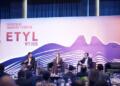
Within the framework of ETYL MTY 2026 , organized by Grupo T21 , Trayecto shared how it managed to reduce the initial response time to road incidents from 10 minutes to just 10 seconds, using a tool that integrates AI , operational information and Samsara technology .
The results were presented as a success story during the workshop “Algorithms on the road: Artificial intelligence applied to risk management in transport and logistics” , organized by Samsara.

Adrián Álvarez, Director of Journey Safety, explained that one of the main problems was the time that elapsed between the call from an operator and the resolution of their request.
In some cases, the process could take between 10 and 20 minutes, while certain requests could last for several days.
“The operator needs to receive an immediate response when requesting assistance during their journey,” Álvarez noted, emphasizing that an unanswered call can result in operational delays, unnecessary stops, and even greater exposure to unsafe situations.
Given this scenario, Trayecto developed Enlace Trayecto , a virtual operator designed to handle the requests of a staff of approximately six thousand operators, through a service available 24 hours a day, seven days a week.
The tool uses information from various platforms, including Samsara’s technology, to validate the operator’s identity, identify the unit, know its location , and determine the type of assistance it requires.
Hernán Guerra, IT director at Trayecto, explained that the goal was not to incorporate artificial intelligence for its own sake, but to find a solution capable of integrating with existing systems and responding to specific needs.
“In technology, we also need the invoice to be more accurate than enthusiasm,” he said, while highlighting the importance of justifying investments through operational results and not just the capabilities of the new tools.
From 10 minutes to a response in seconds
One of the main results of Enlace Trayecto has been the reduction in response times. Requests related to activating or reactivating the engine immobilizer, which previously took an average of 10 minutes, can now be resolved in approximately one minute , under established safety protocols.
In the case of incidents or crisis situations, the initial response time went from around 10 minutes to 10 seconds.
According to the executives, currently about 80% of requests are resolved directly by artificial intelligence, while the remaining 20% require human intervention.
In addition, they reported a request resolution rate of 98.7% , with responses typically occurring between 10 seconds and one minute.
However, both specialists agreed that technology has its limits. In the event of potential robberies, emergencies, or situations requiring specialized assessment, the platform immediately routes the call to the response center, where trained personnel continue providing assistance.
“Artificial intelligence will never provide a solution that has not been previously authorized and programmed by our team,” they emphasized during the presentation.
To achieve this, the system integrates human resources information, telemetry , travel assignments, and control tower records, so that personnel receiving an emergency can learn the background of the request without requiring the operator to repeat their data.
Another challenge was getting operators to agree to interact with a virtual operator. To address this, Trayecto developed three voices, identified as “María, Natalia, and Lucía,” with natural language and the ability to understand different regional expressions.
The project, which under the previous schemes would have required around a year and a half, was developed and implemented in three months, once the corresponding authorization was obtained.
During the meeting, Jimena Ávila, Enterprise Account Executive Mexico of Samsara, presented the success story of Trayecto, accompanied by Julia Monroy, Vice President of Sales for Mexico of Samsara, as part of the workshop organized by the company.
The experience allowed us to demonstrate how Samsara’s technology, through access to telemetry data, unit location, and real-time operational information, integrates with artificial intelligence tools to streamline support for operators and strengthen safety protocols.
The Trayecto success story highlighted the importance of leveraging available information to anticipate risks, reduce response times, and improve coordination between operators and monitoring centers, without replacing human intervention in critical situations.
Comment and follow us on LinkedIn: @Karina Quintero Correspondent / @GrupoT21