The Mexican heavy vehicle industry saw a rebound in production and exports in June, following several months of negative results. However, the performance for the first half of 2026 still reflects a contraction compared to the same period last year, leading the National Association of Bus, Truck, and Tractor-Trailer Manufacturers (ANPACT) to conclude that it is still too early to speak of a consolidated recovery.
During June, 15,262 heavy vehicles were produced , an increase of 7.6% compared to the same month in 2025. Of the total, 14,884 corresponded to the cargo segment , with a growth of 7.3%, while the manufacture of passenger units increased 19.6%, with 378 vehicles.
However, from January to June, production reached 70,876 units , a figure that represents a decrease compared to the same period in 2015. In the cargo segment, 69,122 units were manufactured, a contraction of 13.1%, while in passenger vehicles, 1,754 vehicles were assembled, 7.5% less.
In exports , June also marked a change in trend. During the month, 12,730 heavy vehicles were shipped abroad, a year-on-year increase of 3.2 percent.
However, the first half of the year’s figures remain below those recorded a year earlier. Between January and June, 58,260 units were exported, representing a decrease of 14.5 percent.
The United States remained the main destination for Mexican heavy vehicle exports, followed by Canada and Colombia.
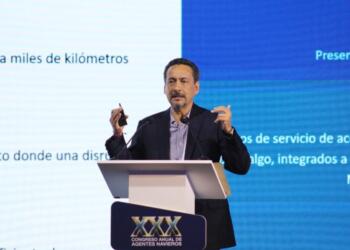
During the monthly results conference, Rogelio Arzate, CEO of ANPACT, explained that the better performance observed in June is due to several factors, including a slight recovery in the US market, the progress of the accelerated depreciation program promoted by the federal government to encourage fleet renewal, and some mobility projects linked to the 2026 FIFA World Cup, particularly in the bus segment.
“We are seeing positive trends. Accelerated depreciation is progressing at an excellent pace, and a large number of projects have already been approved. It is working, and we are seeing a recovery,” he stated.
Despite the positive signs in June, Arzate pointed out that the industry faces another significant challenge: the importation of used heavy vehicles from the United States.
According to ANPACT, between January and May 2026, 7,123 used vehicles entered the country , a 31% reduction compared to the same period of the previous year. However, the association warned that the volume remains high, as for every 100 new heavy vehicles sold in Mexico, an additional 55.3 used units are imported.
Arzate explained that ANPACT is holding meetings with the Ministry of Finance and Public Credit to advance the implementation of reference prices at customs, with the aim of containing the entry of units that, according to the industry, generate economic, environmental and road safety impacts.
“We continue to work very closely with the Ministry of Finance. We are paying close attention to communications related to customs reference prices, because it is an important measure to contain products that harm the market in economic, environmental, and safety terms,” he said.
Comment and follow us on LinkedIn: @Karina Quintero / @GrupoT21