

Grupo México , through its Grupo México Transportes (GMXT) division , decided to withdraw from the freight rail tender process in Argentina, considering that the proposed scheme under the Open Access model lacks the necessary incentives to guarantee long-term efficiency, investment, and competitiveness.
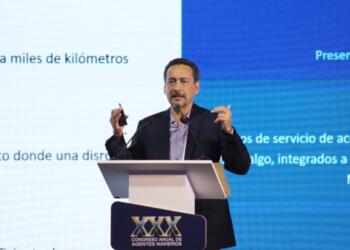
He stated that after analyzing the competition rules, the company’s Board of Directors concluded that the proposed model does not coincide with the model promoted in Mexico and North America.
“The tender in that country contemplates the rail operating model known as Open Access, which consists of an infrastructure used by multiple operators who divide the same cargo among themselves, diminishing the possibility of achieving economies of scale. From our perspective, this model is inefficient, reduces the competitiveness of the system as a whole, increases costs and prices for customers, and requires public subsidies to be maintained. On countless occasions, different companies have collapsed and declared bankruptcy due to this scheme,” he stated.
In contrast, the Vertical Integration model adopted in Mexico and integrated into the United States and Canadian network has generated incentives for investment and operational efficiency , since by controlling the entire system, freight rail companies optimize the use of their assets, improve logistics planning and benefit users and supply chains, he explained.
Volume and revenue on the rise in the third quarter
During the third quarter of 2026 (3Q26), GMXT reported revenues of $978,384,000, an annual increase of 12.3%, while EBITDA reached $388,809,000, an advance of 8.2% compared to the same period in 2025.

The company moved 524,538 railcars, a figure that represented a growth of 5%; the increase was led by the metals segment with a 15.4% increase in cars, followed by intermodal which grew 11.8% and by cement with a 3.5% increase.
The main driver of performance was the intermodal business ; this segment increased its revenue by 16.3%, driven by greater container movement and by the growth of cross-border traffic in the south.
This was further supported by the dynamism of the metals sector, which registered increases of 15.4% in volume and 14.1% in revenue, supported by the recovery of the scrap market and compliance with the slab program.
Likewise, minerals increased its revenue by 13.2% thanks to greater iron ore movements on long-distance routes.
Comment and follow us on LinkedIn: @GrupoT21