Aviation in Latin America and the Caribbean requires more action and support to achieve net-zero emissions by 2050 , as there are currently several obstacles such as economic and development disparities, limited infrastructure and variable regulatory capacities.
The above was part of the conclusions of the study “Net Zero Aviation in Latin America and the Caribbean: Pathways and Trade-offs” , carried out by the Latin American and Caribbean Air Transport Association (ALTA) , with the technical support of ICF as a specialized consultant, which analyzed several alternatives to move towards this goal.
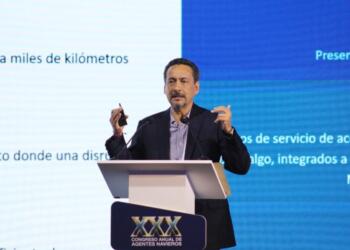
“There is a firm commitment from the industry to achieve Net Zero, but also a recognition that Latin America and the Caribbean face different structural conditions. Therefore, it is essential to rigorously analyze the region’s opportunities and challenges to define a roadmap that is realistic and sustainable over time, bearing in mind that aviation is not a luxury, but an engine of economic development,” stated Peter Cerdá, CEO of ALTA.
As part of the study, existing zero-emission policies and targets were reviewed , and country-by-country data was collected. Technical visits were also conducted to gather the most comprehensive and reliable data. Additionally, meetings were held with all stakeholders: national governments, civil aviation authorities, aircraft manufacturers, suppliers, and other interested parties . This information was used to develop reliable projections and scenarios for 2050.
The analysis highlighted that fleet renewal is one of the most effective measures , enabling significant improvements in fuel efficiency, operating costs, and environmental performance. The study indicated that several airlines in Latin America and the Caribbean have made significant progress in this area, with 38% of their capacity currently operated by new-generation aircraft, surpassing Europe and the United States (34%), and with investments already reaching US$40 billion, representing 1,100 new aircraft.
He explained that operational efficiencies are the most immediate and cost-effective measure, with potential savings of up to 11% in emissions . This includes route optimization, reduced ground time, and the use of digital technologies; however, the success of this pillar depends on coordinated action among governments, airports, and air navigation service providers.
Similarly, he specified that sustainable aviation fuels (SAFs) represent the most powerful long-term tool , although their implementation faces significant barriers.
“SAF is between three and 12 times more expensive than conventional fuel, and its widespread adoption without government incentives could increase costs per seat by $43 and reduce air traffic by 30 percent. The region has the potential to be a major player in the global SAF industry thanks to its local raw materials, although scaling up its production will require supportive policies, infrastructure, and mechanisms to minimize the cost impact on passengers,” the analysis stated.
Another finding of the study was the potential of Latin America and the Caribbean in the carbon credit market, thanks to the diversity of its natural ecosystems, many of which are crucial for global environmental well-being. Between 2020 and 2024, the region issued 23% of global carbon credits, despite contributing only 6.7% of emissions. However, further work is needed to ensure that these nature-based solutions meet the international standards required by the aviation industry. “This is a complementary way to address emissions that cannot be directly reduced.”
The analysis also highlighted that the region’s aviation sector has already made concrete progress in fleet modernization ; that operational efficiency, supported by coordinated decisions and articulated regulatory frameworks, is positioned as one of the most immediate and cost-effective tools for reducing emissions, without ignoring the potential of other alternatives that require more time and specific conditions for their implementation.
“The priority is to lay the foundations for a progressive, inclusive and sustainable transition for regional aviation , in a joint effort with all actors in the aviation ecosystem,” he said.
He explained that operational efficiencies are an essential and immediate opportunity; improvements in aircraft, airports, ground operations and optimization of the flight profile alone offer a significant opportunity to reduce fuel consumption and emissions in the region, with potential savings of 3.3% to 11.3% by 2050 .
“Airlines in the Latin America and Caribbean region have already made significant progress in reducing their emissions through improvements in operational efficiency. However, achieving even greater efficiencies depends on greater government and stakeholder engagement, investment by airports and air navigation service providers, and coordinated action across the entire aviation ecosystem,” he concluded.
Comment and follow us on LinkedIn: @GrupoT21