



Logistics planning in the Mexican automotive industry faces an environment in which anticipating market changes, controlling transportation costs, and strengthening coordination between departments will be crucial to maintaining competitiveness, according to Héctor Martínez, Export Sales & CBU Logistics Department Head at Honda de México , during the conference “Preparing Mexico’s supply chain for the future,” within the framework of Automotive Logistics & Supply Chain .
One of the main challenges Martínez identified is the behavior of supply and demand for land transportation. He explained that the arrival of Chinese automakers in Mexico generated an increase in demand for vehicles to be transported, leading carriers and new market entrants to expand their fleets.
However, the scenario changed. The supply of transport grew considerably, while demand remained relatively stable, leading to greater availability of vehicles and downward pressure on fares.
For automakers, this situation presents an opportunity to negotiate with logistics providers and optimize costs. However, the executive cautioned that the goal should not be limited to obtaining lower rates, but rather to maintain service quality, avoid congestion, and ensure that vehicles arrive at their destinations on time.
Anticipate cycles and leverage technology
One of the biggest challenges for logistics managers is anticipating what will happen in the coming months and years. According to Martínez, the current market conditions are not necessarily new, as the industry has already experienced similar periods of uncertainty .
These cycles are compounded by geopolitical factors that can alter trade conditions and transportation needs. Therefore, the expert believes that artificial intelligence (AI) represents a valuable tool for analyzing large databases, identifying patterns, and developing forecasts that can improve decision-making.
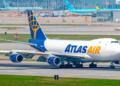
Regarding exports, the specialist highlighted the importance of air transport and acknowledged that Mexico has companies that offer services to meet these needs, although he warned of risks such as vandalism.
In this regard, he raised the possibility of leveraging increased air infrastructure capacity in the future to handle both passenger and freight traffic. He also deemed it necessary to strengthen rail and road transport options to connect ports, production plants, and distribution centers with concessionaires.
The importance of diversifying transportation methods is reflected in the sector’s figures. According to the Federal Civil Aviation Agency (AFAC) , Mexico moved 616,193.8 tons of air cargo during the period January-June 2026, an increase of 4.7% compared to the same period in 2025.
According to Martínez, the selection of each option must respond to the needs of the operation, considering costs, capacity, and efficiency . The priority is to find alternatives that allow the flow of goods to continue without passing on additional costs to the end customer.
Decarbonization and cost control
Another key aspect of his presentation was sustainability . The executive argued that companies must incorporate decarbonization criteria into their logistics decisions by acquiring more efficient vehicles, switching to lower-emission energy sources, and making better use of cargo capacity.
At this point, he highlighted the potential of rail transport to move large volumes of vehicles and components, which can help reduce emissions per unit transported compared to other schemes.
At the same time, he urged companies to review their direct costs and not simply address operational problems as they arise. He explained that the speed at which logistics operates can lead organizations to respond to an incident without sufficiently analyzing its causes, increasing the likelihood of its recurrence.
Therefore, he considered it necessary to take advantage of the available analytical tools to identify the origin of the deviations, understand the conditions in which they occur, and establish corrective measures.
Martínez argued that logistics departments should be involved from the earliest stages of business planning and not only become involved when supply or distribution problems arise .
He noted that companies have more tools at their disposal to prepare for different scenarios. To this end, he considered it necessary to work with a comprehensive vision that includes transport capacity, technology, flexibility, emissions, and costs .
The conclusion of their participation was that logistical competitiveness will not depend on anticipating every event, but on having structures capable of adapting and responding quickly to market changes.
Comment and follow us on LinkedIn: @Humberto Cruz Moya / @GrupoT21