



Mexico and India have formally begun negotiations to establish a Preferential Trade Agreement (PTA) , an initiative that seeks to expand bilateral trade, attract investment, and diversify markets for companies from both countries.
The process began with the signing of the Terms of Reference , which establish the framework, scope, and roadmap for the talks. It also defines the issues on which both delegations will work to reach mutually beneficial agreements.
The negotiation takes place in a context where the diversification of markets and suppliers has become relevant for global supply chains.
For Mexico, expanding its trade links beyond its traditional partners represents an opportunity to explore new export destinations and strengthen its position as a manufacturing platform; for India, the Mexican market constitutes a gateway to companies linked to global value chains .
According to a statement from the Ministry of Economy (SE) , the sectors with the greatest potential for exchange include automotive, chemical, electronic, pharmaceutical, agri-food and energy, as well as critical minerals, medical devices and advanced manufacturing.
These segments open up possibilities for the international movement of raw materials, industrial components, finished products, and specialized goods.

The SE noted that the Terms of Reference cover important areas of negotiation, including market access for goods, rules of origin, customs procedures and trade facilitation , dispute settlement, sanitary and phytosanitary measures, technical barriers to trade and trade defense measures.
For the logistics sector, rules of origin and customs procedures will be key considerations, as they can impact documentation, clearance times, and the costs associated with the exchange of goods. Defining these mechanisms will also be important for companies that integrate inputs from different countries into their manufacturing processes.
The start of these talks follows the understanding reached in June 2025 by Indian Prime Minister Narendra Modi and Mexican President Claudia Sheinbaum during a meeting on the sidelines of the G7 Summit in Canada. At that meeting, both leaders agreed to deepen the partnership between their countries.
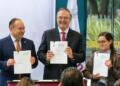
During the visit of Rajesh Agrawal, Secretary of the Department of Commerce of the Ministry of Commerce and Industry of India, and as part of his meetings with Luis Rosendo Gutiérrez Romano, Undersecretary of Foreign Trade of Mexico, both delegations analyzed the prospects of the bilateral economic relationship and the opportunities to increase trade and investment between both countries.
“This initiative seeks to leverage the complementarities between both economies and expand opportunities for Mexican products and companies in one of the world’s most important markets. Thanks to its strong links with global value chains, Mexico is also a significant market for Indian exporters and investors,” the statement said.
In addition to the ACP negotiations, both parties discussed the possibility of organizing a Mexican business mission to India during the first quarter of 2027. The initiative would aim to facilitate business meetings, identify trade opportunities, and strengthen ties between companies from both countries.
The mission could serve as a mechanism to bring exporters, manufacturers, and investors closer together before the trade negotiations conclude, by allowing them to identify potential partners and assess the conditions for accessing the Indian market.
The scope of any eventual agreement will depend on the progress made at the negotiating table and the conditions established for each area of trade. For now, the signing of the Terms of Reference constitutes the first formal step toward building a broader economic relationship between Mexico and India, with potential implications for manufacturing, foreign trade, and supply chains.
According to the DataMéxico portal , in 2025, India’s share of Mexico’s exports was 0.3%, corresponding to 1.97 billion dollars (USD), while India’s share of Mexico’s imports was 1.37%, equivalent to 9.129 billion USD last year.
Comment and follow us on LinkedIn: @GrupoT21