Every last Thursday of September, the International Maritime Organization (IMO) celebrates World Maritime Day , a date dedicated to highlighting the importance of maritime transport, as well as the challenges it faces and the impacts derived from its operations.
This September 24th, the celebration is commemorated under the motto “From policy to practice: driving maritime excellence” , which, for the first time, will be maintained for two consecutive years (2026 and 2027).
To better understand the current situation, according to industry reports, global maritime transport moves more than 80% of global merchandise trade , making it a fundamental component of international supply chains. However, this sector is entering a period of fragile growth, rising costs, and increasing uncertainty, as noted by the United Nations (UN) .
In this year’s World Maritime Day, the IMO highlighted the need for industry standards to be implemented. To advance this goal, the organization is considering technical assistance, training, and cooperation among its member states.
From regulations to decarbonization
Some current regulations make it clear that decarbonization remains an unfinished task . Among the main international instruments are the International Convention for the Safety of Life at Sea ( SOLAS ) and the International Convention for the Prevention of Pollution from Ships ( MARPOL ). The latter, through its Annex VI, establishes measures to reduce air pollution and improve the energy efficiency of ships .
The need to move in this direction is reflected in the figures from the United Nations Conference on Trade and Development (UNCTAD) : during 2024, greenhouse gas emissions from maritime transport increased by 5%; while until May 2025, only 8% of the world fleet’s tonnage was equipped to use alternative fuels.
In addition to existing regulations, there is the proposed IMO Net Zero Framework . This proposal establishes a global standard for the emissions intensity of marine fuels, as well as an economic mechanism for pricing greenhouse gas emissions from ships. However, its formal adoption was postponed for a year during negotiations last October, and therefore it is not yet an international regulation in force.
Major challenges for the sector
Furthermore, the IMO also highlighted the effects of international conflicts on shipping and supply chains . Attacks on merchant ships in various conflict zones, including the Strait of Hormuz , have increased risks to crews and disrupted the movement of goods.
“The lives of seafarers are threatened and the global supply of fuel, fertilizers and food has been disrupted. These disruptions to the global economy have devastating consequences, especially for developing countries,” said António Guterres, UN Secretary-General.
Thus, World Maritime Day 2026 makes it clear that the challenges facing shipping extend far beyond establishing new commitments. For an industry that underpins a significant portion of international trade, the enforcement of existing regulations and the development of low-emission technologies will be central to its transformation in the coming years.
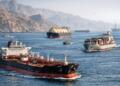
The main image was generated using artificial intelligence.
Comment and follow us on LinkedIn: @GrupoT21