“Logistics never stops, and the supply chain must always move forward, even with outstanding payments.” Under this premise, Ricardo Meza, Sales Manager at Transportes de Trailers Toluca (Trattosa) , warned that liquidity problems have become one of the main challenges for freight transport in Mexico .
Delays in payments from customers and shippers are forcing companies in the sector to finance a significant part of the supply chain with their own resources, compromising their operational capacity .
In an interview with T21, Meza pointed out that non-payment represents one of the biggest pressures on this industry, since companies must keep their fleets in operation while waiting for the release of funds for the services they provide.
“Today the logistics chain is supporting all payments and financing the supply chain,” said Meza, who explained that this situation makes it difficult to cover essential expenses such as vehicle maintenance, fuel purchases, operator payments, and other costs necessary to maintain the flow of goods in the country.
The problem is relevant due to the strategic role that road transport plays within the Mexican economy.
According to the Mexican Transportation Institute (IMT) , approximately 84% of all goods transported within the country are moved by road , making road transport the main link for supplying various industries such as manufacturing, automotive, mining, and agri-food.
The situation worsens when considering the importance of trucking to the country’s economy. According to the Ministry of Infrastructure, Communications and Transportation (SICT) , this sector contributes 3.8% to the national Gross Domestic Product (GDP) .

Operating costs, the other challenge
Ricardo Meza added that the second major challenge for freight transportation is the increase in operating costs, particularly due to rising fuel prices. According to estimates from the National Chamber of Freight Transportation (Canacar) , the sector incurred additional expenses of 22.015 billion pesos (MXN) in 2025 due to the increase in fuel prices, with diesel continuing to be one of the main components of the trucking industry’s cost structure.
According to PETROIntelligence , the national average price of diesel was 27.128 pesos per liter on July 1, despite the Mexican government’s tax incentives to keep the price of this fuel below 27 pesos per liter.
To cope with this financial pressure, Trattosa has chosen to maintain a permanent dialogue with its clients to renegotiate rates and pass on some of the increased costs to the shippers, with the aim of preserving the viability of operations.
In this context, payment delays not only affect the liquidity of carriers, but also generate a domino effect on the entire logistics chain, by limiting the capacity to invest in maintenance, fleet renewal and hiring of operators.
Meza considered that, despite the complex environment, the second half of the year could present better conditions for road transport, provided that there is greater awareness among participants in the supply chain about the value that freight transport brings to the functioning of the economy.
The executive emphasized that logistics should be viewed as a strategic activity, not merely an operating cost. “We need to place more value on the supply chain because it is crucial for Mexico and the world,” he stated.
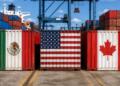
Regarding the business environment due to the renegotiation of the United States-Mexico-Canada Agreement (USMCA) , he believes that companies will need to adapt to regulatory and operational changes , although he ruled out the possibility that this will hinder logistics activity. In his opinion, the sector has demonstrated its ability to adjust to changing circumstances.
This view aligns with that of the Ministry of Economy , which identifies North American regional integration as one of the main drivers of Mexican foreign trade, where logistical efficiency is crucial for maintaining the competitiveness of Mexican exports to the United States, the country’s main trading partner. In April 2026 alone, Mexico shipped goods to its northern neighbor worth US$50.692 billion , a 21.1% increase compared to the same month in 2025.
Comment and follow us on LinkedIn: @Humberto Cruz Moya / @GrupoT21